

A Complete Industry Analysis for Students & Healthcare Professionals
The healthcare industry in 2026 is more data-driven than ever before. With expanding insurance coverage, digitized health records, global outsourcing, and stricter compliance regulations, the need for skilled medical coders continues to grow steadily.
According to data from the U.S. Bureau of Labor Statistics (BLS), employment for health information technologists and medical registrars (which includes medical coders) is projected to grow faster than average through the decade. In India, the healthcare outsourcing industry continues to expand due to increased demand from US healthcare providers, making the country one of the largest hubs for medical coding services.
This brings us to the key question: Is medical coding a good career in 2026?
The short answer is yes — but with important considerations. In this comprehensive guide, we analyze job demand, salary trends, required skills, challenges, certifications, and long-term growth prospects. We also explain how structured training from institutions like NIMC (National Institute of Medical Coding) and Transorze Training Partner prepares aspiring coders for industry success.
Market Demand & Job Growth in 2026
- Global Healthcare Expansion
Healthcare spending continues to rise globally due to:
- Aging populations
- Chronic disease prevalence
- Insurance penetration growth
- Expansion of private hospital networks
- Government healthcare schemes
Each healthcare encounter generates documentation that must be coded accurately for billing and compliance. This creates consistent demand for qualified medical coders.
- India as a Global Medical Coding Hub
India has established itself as a leading destination for healthcare Business Process Outsourcing (BPO). Major US healthcare providers outsource medical coding operations to Indian firms due to:
- Skilled English-speaking workforce
- Cost efficiency
- Strong IT infrastructure
- Time-zone advantages
This ensures that medical coding career prospects in India remain strong in 2026, particularly in cities like Chennai, Bangalore, Hyderabad, Kochi, and Coimbatore.
- Digital Health & Compliance Regulations
Healthcare providers are increasingly adopting:
- Electronic Health Records (EHR)
- AI-assisted coding systems
- Revenue Cycle Management platforms
- Stricter documentation audits
While automation supports coders, it does not replace them. Instead, AI increases the need for trained professionals who can verify, interpret, and audit complex cases.
Medical Coding Salary 2026: What Can You Expect?
Salary is a key factor when evaluating whether medical coding is a good career in 2026.
Entry-Level (0–2 Years)
₹1.8 – ₹3.5 LPA
₹15,000 – ₹30,000 per month
Mid-Level (3–5 Years)
₹4 – ₹7 LPA
Senior-Level (6+ Years)
₹8 – ₹15+ LPA
Specialized & Certified Professionals
₹10 – ₹18 LPA (Auditors, Quality Analysts, Compliance Managers)
Factors influencing salary include:
- Certification (CPC, CCS, CCA)
- Specialization (Inpatient, Surgical, Risk Adjustment)
- Employer type (MNC vs local firm)
- Geographic location
- Experience level
Certified professionals typically earn significantly higher salaries than non-certified candidates.
Required Skills & Certifications in 2026
Technical Skills
To succeed in 2026, coders must master:
- ICD-10-CM & ICD-10-PCS
- CPT coding guidelines
- HCPCS Level II
- Revenue Cycle Management
- Compliance standards (HIPAA for US projects)
- EHR software systems
Strong knowledge of anatomy, physiology, and medical terminology remains foundational.
Soft Skills
Medical coding also requires:
- Attention to detail
- Analytical thinking
- Time management
- Ethical integrity
- Communication skills
The ability to interpret physician documentation accurately is what differentiates high-performing coders.
Industry Certifications
Globally recognized certifications include:
- CPC (Certified Professional Coder) – AAPC
- CCS (Certified Coding Specialist) – AHIMA
- CCA (Certified Coding Associate)
These certifications validate professional competence and significantly improve employability.
Institutions such as NIMC (National Institute of Medical Coding) and Transorze Training Partner offer structured training programs aligned with certification standards, helping students prepare for competitive exams and real-world project environments.
Advantages of a Medical Coding Career
- Stable Healthcare Industry
Healthcare remains recession-resistant. Even during economic downturns, medical services continue.
- Global Career Opportunities
Medical coding skills are transferable internationally, particularly in US healthcare outsourcing.
- Remote Work Potential
In 2026, many coding roles offer:
- Hybrid work models
- Fully remote opportunities
- Flexible schedules
- Growth Without Extensive Higher Education
Unlike clinical roles, medical coding does not require a medical degree. Skill-based certification can lead to strong career growth.
- Career Progression
Career paths include:
- Senior Coder
- Coding Auditor
- Quality Analyst
- Team Lead
- Compliance Officer
- Healthcare Data Analyst
Challenges & Considerations
A balanced view is essential when asking: Is medical coding a good career in 2026?
- Continuous Learning Required
Coding guidelines are updated annually. Professionals must stay current.
- Productivity Targets
Most employers set daily coding quotas.
- Accuracy Pressure
Errors can cause claim denials or compliance risks.
- Certification Investment
Obtaining certifications requires preparation, effort, and exam fees.
However, with structured training and commitment, these challenges are manageable.
Educational Pathways: How to Enter the Field
Who Can Become a Medical Coder?
- Life science graduates
- Nursing professionals
- Pharmacy graduates
- Allied health professionals
- Non-medical graduates (with proper training)
Why Structured Training Matters
Medical coding is a skill-based profession. Self-study alone may not be sufficient.
A structured institute provides:
- Comprehensive anatomy training
- Coding guideline mastery
- Mock exams
- Real-time case studies
- Placement support
NIMC (National Institute of Medical Coding), along with Transorze Training Partner, is known for offering industry-aligned programs that combine theoretical knowledge with practical exposure. Their curriculum is designed to meet current employer expectations and certification requirements
Career Advancement Opportunities in 2026
Medical coding is not a dead-end job. It opens pathways into:
- Medical auditing
- Compliance management
- Clinical documentation improvement (CDI)
- Risk adjustment coding
- Healthcare analytics
- International project management
With experience and certification, professionals can significantly increase their earning potential.
So, Is Medical Coding a Good Career in 2026?
Yes — provided you:
- Obtain proper training
- Develop strong technical and analytical skills
- Pursue certification
- Stay updated with guidelines
The medical coding job outlook remains positive due to healthcare digitization, global outsourcing, and regulatory requirements.
For career changers and fresh graduates seeking a stable, skill-based profession in healthcare, medical coding presents a strong opportunity.
Frequently Asked Questions (FAQ)
- Is medical coding a good career in 2026 in India?
Yes. The healthcare outsourcing industry continues to grow, and India remains a major hub for US medical coding projects.
- What is the medical coding salary in 2026?
Entry-level salaries range from ₹1.8 to ₹3.5 LPA, while experienced certified professionals can earn ₹10+ LPA depending on specialization.
- Will AI replace medical coders?
AI assists coding processes but cannot replace human coders due to compliance complexities and clinical interpretation requirements.
- What certifications are required for medical coding?
CPC (AAPC), CCS (AHIMA), and CCA are globally recognized certifications.
- How long does it take to become a medical coder?
Most structured programs take 3–6 months, followed by certification preparation.
- Is medical coding stressful?
It requires attention to detail and productivity management, but it is less physically demanding than clinical healthcare roles.
- Which institute is best for medical coding training?
Choose institutes with industry-aligned curriculum, practical training, and certification preparation. Institutions like NIMC and Transorze Training Partner are recognized for structured, job-oriented programs.
Conclusion
So, is medical coding a good career in 2026? The evidence strongly suggests yes.
Healthcare digitization, global outsourcing demand, compliance regulations, and steady salary growth make medical coding a stable and promising profession. While it requires continuous learning and precision, it offers strong career mobility and global exposure.
If you are considering entering this field, invest in structured, industry-focused training. NIMC (National Institute of Medical Coding) and Transorze Training Partner provide comprehensive programs designed to prepare students for certification and real-world success.
Take the first step today — build the skills that healthcare organizations worldwide depend on.
Medical coding is one of the fastest-growing non-clinical healthcare professions in India and globally. As healthcare systems become increasingly digitized and insurance-driven, the demand for skilled, certified medical coders continues to rise.
But what exactly are the skills required to become a medical coder? Is it only about memorizing codes, or does it require deeper clinical and analytical abilities?
In this comprehensive guide, we break down the technical and soft skills necessary for success, backed by global standards such as (American Academy of Professional Coders) and AHIMA (American Health Information Management Association). We also explain how structured training from institutions like NIMC (National Institute of Medical Coding) and Transorze Training Partner helps students develop these competencies in a practical, job-ready manner.
Understanding the Role of a Medical Coder
Before exploring the skills, it’s important to understand the role.
A medical coder translates healthcare diagnoses, procedures, and services into standardized alphanumeric codes using systems such as:
- ICD-10-CM – Diagnosis coding
- ICD-10-PCS – Inpatient procedure coding
- CPT (Current Procedural Terminology) – Outpatient procedures
- HCPCS – Supplies and additional services
These codes are used for:
- Insurance reimbursement
- Medical billing
- Regulatory compliance
- Data reporting and analytics
- Hospital revenue cycle management
Accuracy is critical. Even minor coding errors can lead to claim denials, compliance risks, or financial losses.
Core Technical Skills Required to Become a Medical Coder
- Strong Knowledge of Medical Terminology
Medical coders must understand:
- Disease processes
- Surgical procedures
- Pharmacology basics
- Diagnostic testing terminology
Without medical terminology knowledge, accurate coding is impossible. Most reputable training programs begin with this foundation.
- Anatomy and Physiology Expertise
Coders need to understand:
- Body systems
- Organ functions
- Pathophysiology
- Surgical anatomy
For example, coding a cardiac catheterization requires understanding coronary anatomy. Institutions like NIMC ensure that anatomy modules are integrated before advanced coding training.
- Proficiency in ICD-10-CM and CPT Coding Systems
Mastering coding guidelines is non-negotiable.
Coders must:
- Interpret ICD-10-CM conventions
- Apply CPT coding rules
- Understand modifiers
- Follow official coding guidelines
Certifications from AAPC (CPC) and AHIMA (CCS) validate proficiency in these systems.
- Knowledge of Healthcare Compliance & Regulations
Medical coding is governed by strict compliance standards.
Coders must understand:
- HIPAA guidelines (for US projects)
- Documentation standards
- Fraud and abuse prevention
- Insurance audit protocols
Incorrect coding can lead to legal penalties. This makes compliance awareness a critical skill.
- Understanding of Revenue Cycle Management (RCM)
Medical coding is part of the larger billing workflow.
Coders should understand:
- Claim submission process
- Denial management
- Insurance verification
- Reimbursement methodologies
At Transorze Training Partner, students are trained in practical RCM workflows to simulate real-world project environments.
- Familiarity with EHR & Coding Software
Modern healthcare relies on technology.
Coders must be comfortable with:
- Electronic Health Records (EHR) systems
- Encoder software
- Medical billing platforms
- Data entry tools
Basic computer proficiency and system navigation skills are essential.
Analytical and Cognitive Skills
- Attention to Detail
Medical coding demands extreme precision.
A small error in a diagnosis code can result in:
- Claim rejection
- Revenue loss
- Compliance audit
Successful coders review documentation carefully and cross-check guidelines.
- Analytical Thinking
Coders must interpret physician documentation accurately.
They need to:
- Identify primary vs secondary diagnoses
- Apply coding sequencing rules
- Clarify ambiguous documentation
This requires logical reasoning and critical thinking.
- Problem-Solving Skills
Sometimes documentation may be incomplete or unclear.
Coders must:
- Query physicians professionally
- Apply official coding guidelines
- Avoid assumptions
Problem-solving ability differentiates average coders from expert professionals.
Essential Soft Skills Required to Become a Medical Coder
Technical skills alone are not enough. Soft skills play a major role in long-term success.
- Communication Skills
Coders interact with:
- Physicians
- Billing departments
- Auditors
- Insurance companies
Clear, professional communication ensures accurate documentation and fewer claim issues.
- Time Management
Coding professionals often work with productivity targets.
They must:
- Meet daily coding quotas
- Maintain accuracy under deadlines
- Balance speed and precision
Proper time management improves job performance and career growth.
- Ethical Integrity
Medical coding directly impacts healthcare finances.
Coders must adhere to:
- Ethical coding standards
- Compliance regulations
- Confidentiality requirements
Ethics is emphasized in certifications from AAPC and AHIMA and in structured training programs at NIMC (National Institute of Medical Coding).
- Continuous Learning Mindset
Coding guidelines update annually.
Successful professionals:
- Stay updated with ICD revisions
- Attend workshops
- Renew certifications
- Upgrade skills regularly
Institutions like Transorze Training Partner support learners through an updated curriculum aligned with industry changes.
Practical Experience: The Real Differentiator
While theoretical knowledge is important, employers prefer candidates with hands-on practice.
Practical training includes:
- Live case studies
- Mock coding audits
- Real-world medical records practice
- Certification exam preparation
NIMC and its training associate Transorze focus on application-based learning, ensuring students are job-ready rather than only exam-ready.
Who Can Become a Medical Coder?
The profession is open to:
- Life science graduates
- Nursing graduates
- Pharmacy students
- Allied health professionals
- Non-medical graduates (with structured training)
What matters most is acquiring the right skills and certification.
Why Skill-Based Training Matters
Medical coding is not a general academic subject—it is a skill-based profession.
A structured program helps:
- Build clinical foundations
- Practice real coding scenarios
- Prepare for CPC or CCS exams
- Gain interview confidence
Choosing a credible institution such as NIMC (National Institute of Medical Coding) in collaboration with Transorze Training Partner ensures alignment with industry standards and employer expectations.
Career Impact of Strong Skill Development
When you develop the right skills required to become a medical coder, you unlock:
- Entry-level coding positions
- Higher salary growth
- Promotion to auditing roles
- Remote job opportunities
- International career prospects
Skill strength directly influences employability and salary potential.
Frequently Asked Questions (FAQ)
- What are the most important skills required to become a medical coder?
The most important skills include medical terminology knowledge, ICD-10-CM and CPT proficiency, attention to detail, analytical ability, and understanding of compliance regulations.
- Do I need a medical background to become a coder?
No, but a background in life sciences or healthcare helps. With structured training and certification, non-medical graduates can also enter the field.
- How long does it take to learn medical coding skills?
Most professional training programs range from 3 to 6 months, depending on curriculum depth and practical exposure.
- Is certification mandatory for medical coding jobs?
While not always mandatory, certifications like CPC (AAPC) or CCS (AHIMA) significantly improve job prospects and salary potential.
- Can I learn medical coding online?
Yes, many institutes offer online and hybrid training models. However, practical case-based training is essential for job readiness.
- Are soft skills important in medical coding?
Absolutely. Communication, time management, and ethical standards are critical for long-term career growth.
- What software skills are required for medical coding?
Basic computer knowledge, familiarity with EHR systems, encoder tools, and medical billing platforms are required.
Conclusion: Building the Right Skill Foundation for Success
Medical coding is a precision-driven, compliance-focused profession that combines clinical knowledge with analytical expertise. Understanding the skills required to become a medical coder is the first step toward building a stable and rewarding healthcare career.
Whether you are a graduate exploring healthcare careers or a professional seeking specialization, developing the right technical and soft skills is essential.
Structured, industry-aligned training from NIMC (National Institute of Medical Coding) and Transorze Training Partner can help you gain practical exposure, certification preparation, and job-ready confidence.
If you are serious about entering the medical coding profession, now is the time to build your skills with a trusted training provider and take the first step toward a future-ready healthcare career.
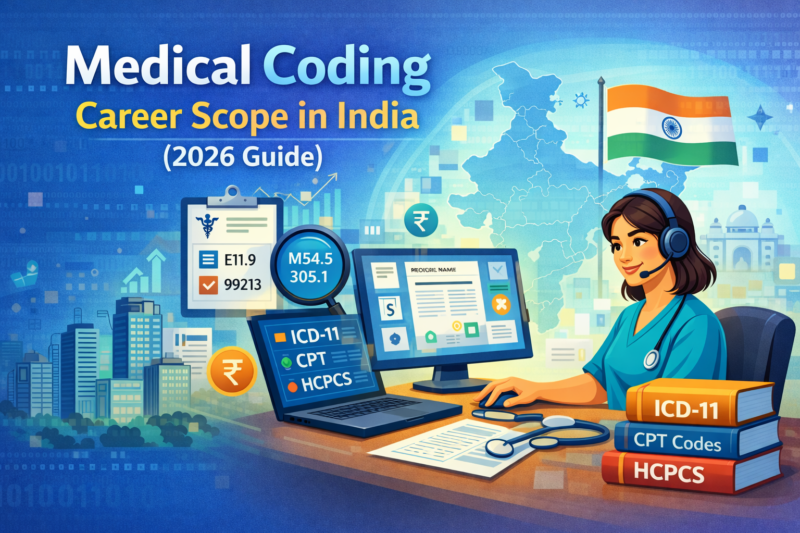
The Indian healthcare industry is undergoing rapid digital transformation. With increasing health insurance penetration, government health schemes like Ayushman Bharat, expanding hospital networks, and global outsourcing opportunities, medical coding has emerged as one of the fastest-growing healthcare careers in India.
If you're exploring a stable, skill-based profession with strong global demand, understanding the Medical Coding Career Scope in India is crucial before making a decision.
This comprehensive guide explains career opportunities, salary prospects, required skills, certifications, industry trends, and how institutions like NIMC (National Institute of Medical Coding) and Transorze Training Partner help students build credible careers in this field.
What is Medical Coding?
Medical coding is the process of converting healthcare diagnoses, procedures, services, and equipment into standardized alphanumeric codes. These codes are used for:
- Insurance claim processing
- Medical billing
- Hospital record maintenance
- Government reporting
- Healthcare analytics
- Regulatory compliance
Common coding systems include:
- ICD-10-CM – Diagnosis coding
- ICD-10-PCS – Inpatient procedure coding
- CPT (Current Procedural Terminology) – Outpatient procedures
- HCPCS – Supplies and additional services
In India, medical coding professionals often work on US healthcare projects, making this a globally aligned profession with strong export-driven demand.
Why Medical Coding Career Scope in India is Growing Rapidly
- Expansion of the Indian Healthcare Sector
India’s healthcare sector is projected to cross USD 370+ billion in the coming years. Growth drivers include:
- Corporate hospital expansion
- Medical tourism
- Digital health records implementation
- Insurance penetration growth
- Government health schemes
Each patient visit generates documentation that must be coded accurately — increasing demand for trained professionals.
- Rising Health Insurance & Claim Processing
With schemes like:
- Ayushman Bharat (PM-JAY)
- State government health insurance programs
- Private insurance policies
Accurate coding is essential for claim approvals. Incorrect coding can lead to claim rejection or compliance issues. This makes certified coders highly valuable.
- India as a Global Outsourcing Hub
India is a leading destination for healthcare BPO and medical coding outsourcing. Major US healthcare companies outsource coding operations to Indian firms due to:
- Skilled workforce
- Cost efficiency
- English proficiency
- Time zone advantage
This ensures sustained job opportunities across metropolitan and Tier-2 cities.
Medical Coding Jobs in India
The range of medical coding jobs in India continues to expand. Career options include:
Entry-Level Roles
- Medical Coder
- Junior Coding Executive
- Medical Billing Executive
- Coding Analyst Trainee
Mid-Level Roles
- Senior Medical Coder
- Coding Auditor
- Quality Analyst
- Team Leader
Advanced Roles
- Coding Manager
- Compliance Officer
- Clinical Documentation Specialist
- Healthcare Data Analyst
Work Environments
- Multi-specialty hospitals
- Healthcare BPO companies
- Insurance firms
- Third-party administrators (TPAs)
- Medical billing companies
- Remote/work-from-home roles
With experience, professionals can also pursue international certifications and work with global healthcare providers.
Medical Coding Salary in India (2026 Overview)
One of the biggest attractions of this profession is the competitive salary structure relative to entry barriers.
Entry-Level (0–2 Years)
₹15,000 – ₹30,000 per month
₹1.8 – ₹3.6 LPA
Mid-Level (3–5 Years)
₹3.5 – ₹6 LPA
Senior-Level (6+ Years)
₹6 – ₹12+ LPA
Specialized Roles (Certified & Auditors)
₹8 – ₹18 LPA (depending on certification and employer)
Salary depends on:
- Certification status
- Specialization (Surgery, Radiology, Cardiology, coding, etc.)
- Employer type (MNC vs local firm)
- Location (Chennai, Bangalore, Hyderabad offer higher packages)
Professionals with strong auditing skills and international certifications command premium compensation.
Required Skills for a Successful Medical Coding Career
To succeed in the Medical Coding Career Scope in India, candidates must develop:
- Strong Anatomy & Physiology Knowledge
Understanding body systems and medical terminology is foundational.
- Attention to Detail
Even a minor coding error can result in claim denial.
- Analytical Skills
Interpreting clinical documentation accurately is critical.
- Compliance Awareness
Understanding healthcare regulations and documentation standards.
- Communication Skills
Interacting with physicians and billing teams requires clarity and professionalism.
- Technical Skills
Familiarity with:
- Electronic Health Records (EHR)
- Medical billing software
- Coding guidelines updates
Professional training institutions like NIMC (National Institute of Medical Coding) and Transorze Training Partner emphasize practical coding exercises, live case studies, and compliance-focused training to build these competencies.
Educational Pathways & Medical Coding Certification
You don’t need an MBBS degree to enter this field. However, candidates with the following backgrounds have an advantage:
- BSc (Nursing)
- BPharm
- BSc Biotechnology
- Life Sciences graduates
- Allied health professionals
- Non-medical graduates (with proper training)
Medical Coding Courses
A structured training program typically includes:
- Medical terminology
- Anatomy & Physiology
- ICD-10-CM
- CPT coding
- HCPCS
- Claim processing workflow
- Compliance & ethics
- Mock exams & live projects
Institutions like NIMC and its training associate Transorze Training Partner focus on industry-oriented medical coding courses that prepare students for real-time project environments.
Importance of Medical Coding Certification
Certifications improve employability and salary prospects. Popular certifications include:
- CPC (Certified Professional Coder)
- CCS (Certified Coding Specialist)
- CCA
- Specialty certifications
Certified candidates are preferred by multinational healthcare companies and coding firms.
Career Growth & Long-Term Scope
Medical coding is not a stagnant career. Growth pathways include:
- Specialization
- Surgical coding
- Inpatient coding
- Oncology coding
- Cardiology coding
- Quality & Auditing
Auditors verify coding accuracy and ensure compliance.
- Management Roles
Team leads and coding managers handle operations.
- International Opportunities
With global certifications, professionals can work abroad or remotely for US firms.
- Healthcare Analytics & AI
Coders with data analysis skills can transition into health informatics and analytics roles.
Industry Trends Shaping Medical Coding in India (2026)
- Increased adoption of AI-assisted coding
- Greater demand for compliance auditing
- Remote and hybrid work models
- Stronger integration of EHR systems
- Expansion of medical coding hubs in Tier-2 cities
While AI supports coding efficiency, human coders remain essential for accuracy, complex case interpretation, and compliance validation.
Why Choose Structured Training Before Entering the Field?
Medical coding is skill-driven. Self-learning is possible but often insufficient for employment.
A structured training institute ensures:
- Updated coding guidelines
- Hands-on practice
- Mock interviews
- Placement support
- Industry exposure
Organizations such as NIMC (National Institute of Medical Coding), in collaboration with Transorze Training Partner, are recognized for offering structured training pathways aligned with current industry demands in India.
Is Medical Coding a Good Career Choice in India?
Yes — particularly if you are looking for:
- A stable healthcare career
- Non-clinical work environment
- Opportunities to work with international clients
- Career growth without extensive higher education
- Work-from-home potential
The Medical Coding Career Scope in India continues to expand due to healthcare digitization and global outsourcing demand.
Frequently Asked Questions (FAQ)
- What is the scope of medical coding in India in 2026?
The scope is strong and expanding due to healthcare digitization, insurance growth, and outsourcing demand from US healthcare providers.
- Is medical coding a good career for freshers?
Yes. Fresh graduates from life sciences and healthcare backgrounds can start as junior coders and grow with experience.
- What is the starting medical coding salary in India?
Entry-level salaries range from ₹1.8 LPA to ₹3.6 LPA depending on skills, location, and certification.
- Do I need a medical degree for medical coding?
No. A medical background helps, but structured training and certification are sufficient.
- Which certification is best for medical coding?
CPC is widely recognized internationally, while other certifications add specialization value.
- Can medical coders work from home?
Yes. Many companies offer remote coding roles, especially for experienced professionals.
- How long does it take to complete a medical coding course?
Typically 3–6 months depending on the training program structure.
- Is medical coding stressful?
The job requires attention to detail but is less physically demanding than clinical roles.
- What skills are most important in medical coding?
Anatomy knowledge, attention to detail, analytical ability, and compliance awareness.
Conclusion: Building a Future in Medical Coding
The Medical Coding Career Scope in India is promising, future-ready, and globally connected. As healthcare systems expand and digitize, the demand for trained coding professionals will only increase.
Whether you are a graduate exploring healthcare careers or a working professional seeking a stable, skill-based profession, medical coding offers:
- Job stability
- International exposure
- Attractive salary growth
- Remote work flexibility
Choosing the right training pathway is essential. Institutions such as NIMC (National Institute of Medical Coding) and Transorze Training Partner have contributed to building skilled medical coding professionals aligned with industry standards.
If you are serious about entering this growing healthcare domain, start by researching certified medical coding courses and gaining structured training that prepares you for real-world projects.
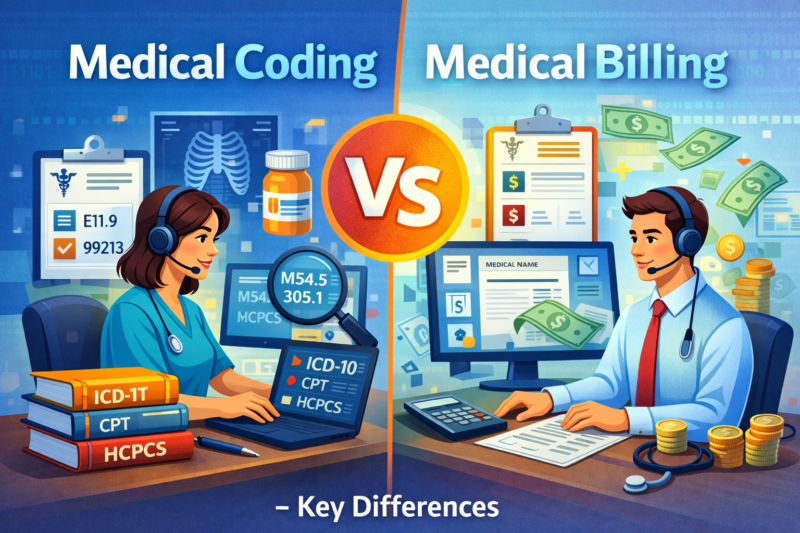
In today’s healthcare ecosystem, accurate documentation and financial management are just as important as clinical care. Yet many aspiring healthcare professionals often confuse two critical administrative roles: medical coding vs medical billing.
Although these professions work closely together in the healthcare revenue cycle, they are fundamentally different in their responsibilities, skill requirements, and career trajectories.
Understanding the distinction between medical coding vs medical billing is essential if you are:
- Considering a career in healthcare administration
- Exploring certification programs
- Managing a hospital or clinic's revenue cycle
- Seeking clarity on job roles in the medical BPO/KPO sectors
At institutions like NIMC (National Institute of Medical Coding) and Transorze Training Partner, students are trained to clearly understand the difference between these two professions, ensuring they build the right career path based on their strengths and interests.
This guide provides an expert-backed, practical breakdown of medical coding and medical billing — including roles, certifications, salary expectations, and real-world workflow differences.
What is Medical Coding?
Medical coding is the process of translating healthcare diagnoses, procedures, and services into standardized alphanumeric codes.
Medical coders analyze clinical documentation and assign codes using globally recognized systems such as:
- ICD-10-CM – Diagnosis coding
- CPT (Current Procedural Terminology) – Procedure coding
- HCPCS Level II – Supplies and equipment coding
In India, ICD-10 is widely used for hospital reporting, insurance claims, and government schemes like PM-JAY (Ayushman Bharat).
Key Responsibilities of Medical Coders
Medical coders typically:
- Review patient charts and discharge summaries
- Assign ICD-10 diagnosis codes
- Assign CPT procedure codes
- Ensure documentation supports assigned codes
- Follow AAPC and AHIMA coding guidelines
- Query physicians for clarification when needed
- Maintain compliance with healthcare regulations
- Participate in internal coding audits
Daily Work Scenario
A coder receives a patient file for a diabetic patient admitted for foot ulcer treatment. The coder must:
- Identify the primary diagnosis (e.g., Type 2 Diabetes)
- Assign complication codes
- Code procedures performed
- Ensure documentation justifies medical necessity
Accuracy is critical — even minor coding errors can lead to claim denial.
What is Medical Billing?
Medical billing is the process of submitting, tracking, and managing healthcare claims to ensure providers receive payment for services rendered.
Medical billers use the codes assigned by coders to generate insurance claims and manage revenue collection.
Key Responsibilities of Medical Billers
Medical billers typically:
- Verify patient insurance eligibility
- Prepare and submit insurance claims
- Calculate patient responsibility (copay, deductible)
- Follow up on denied or unpaid claims
- Post payments to patient accounts
- Communicate with insurance companies
- Handle accounts receivable
- Generate patient billing statements
Daily Work Scenario
A biller receives coded data for a surgical procedure. The biller must:
- Create an electronic claim
- Submit it to the insurer
- Track claim status
- Address rejections if coding mismatches occur
- Follow up for payment
Medical billing focuses on financial processing rather than clinical interpretation.
Medical Coding vs Medical Billing – Side-by-Side Comparison
| Aspect | Medical Coding | Medical Billing |
| Primary Focus | Translating clinical documentation into codes | Managing claims and reimbursement |
| Core Input | Medical records and physician notes | Codes assigned by coders |
| Core Output | ICD-10, CPT, HCPCS codes | Insurance claims and payment reports |
| Skill Emphasis | Medical terminology, anatomy, compliance | Insurance policies, communication, financial management |
| Interaction Level | Mostly internal (physicians, auditors) | External (patients, insurance companies) |
| Error Impact | Claim denial, audit risk, compliance issues | Payment delays, revenue loss |
| Certification Bodies | AAPC, AHIMA | AAPC, billing associations |
| Career Path | Auditor, Coding Manager, Compliance Officer | Billing Manager, Revenue Cycle Manager |
When comparing medical coding vs medical billing, coding is clinically analytical, while billing is financially operational.
Where Medical Coding and Medical Billing Overlap
Despite differences, there are areas of overlap:
- Revenue Cycle Management
Both roles are essential stages in the healthcare revenue cycle.
- Compliance
Both must adhere to:
- HIPAA (for US processes)
- Insurance regulations
- Documentation standards
- Anti-fraud guidelines
- Documentation Knowledge
Billers must understand coding basics. Coders must understand billing impact.
- Software Systems
Both use:
- Practice management software
- Electronic Health Records (EHR)
- Revenue cycle systems
Understanding the interdependence in medical coding vs medical billing helps healthcare organizations improve claim acceptance rates.
Skills Required: Medical Coding vs Medical Billing
Skills for Medical Coding
- Strong medical terminology knowledge
- Anatomy & physiology understanding
- ICD-10 & CPT proficiency
- Analytical thinking
- Detail-oriented mindset
- Compliance awareness
Skills for Medical Billing
- Insurance terminology knowledge
- Communication skills
- Accounts receivable management
- Negotiation and follow-up ability
- Financial documentation accuracy
If you prefer analytical, documentation-based work, coding may suit you.
If you enjoy communication and financial processes, billing may be ideal.
Certifications and Training Pathways
Medical Coding Certifications
- CPC (Certified Professional Coder) – AAPC
- CCS (Certified Coding Specialist) – AHIMA
- CCA (Certified Coding Associate) – AHIMA
Medical Billing Certifications
- CPB (Certified Professional Biller) – AAPC
- CBCS (Billing & Coding Specialist)
Institutions such as NIMC (National Institute of Medical Coding) and Transorze Training Partner offer structured programs that prepare students for these certifications with:
- Updated curriculum aligned to ICD-10 and CPT
- Practical case studies
- Mock exams
- Industry-oriented training
- Placement guidance
Salary Comparison (India 2026)
Medical Coding Salary
- Entry-Level: ₹15,000 – ₹25,000/month
- 2–5 Years: ₹30,000 – ₹60,000/month
- Senior Auditor: ₹6–12 LPA
Medical Billing Salary
- Entry-Level: ₹12,000 – ₹22,000/month
- Experienced: ₹25,000 – ₹50,000/month
- Billing Manager: ₹5–10 LPA
In international (US) healthcare processes, salaries may be higher depending on certification and experience.
Which Career Should You Choose?
When evaluating medical coding vs medical billing, ask yourself:
- Do I enjoy analyzing medical records? → Choose Coding
- Do I enjoy communication and financial tracking? → Choose Billing
- Do I want remote work flexibility? → Both offer options
- Do I want compliance and audit specialization? → Coding
Both careers offer:
✔ Job stability
✔ Growing demand
✔ Remote opportunities
✔ Career advancement
Frequently Asked Questions (FAQ)
- What is the main difference between medical coding and medical billing?
Medical coding converts medical documentation into standardized codes, while medical billing uses those codes to submit claims and collect payment.
- Can one person do both medical coding and medical billing?
Yes. Smaller clinics often combine roles. However, larger hospitals typically separate these responsibilities.
- Which is harder – medical coding or medical billing?
Medical coding requires deeper medical knowledge and analytical skills. Billing requires communication and insurance expertise. Difficulty depends on individual strengths.
- Is certification necessary for both roles?
Certification is not legally mandatory but highly recommended. Employers prefer certified professionals.
- Which profession pays more?
Generally, certified medical coders earn slightly higher salaries, especially in auditing and compliance roles.
- Can both roles be done remotely?
Yes. Many coders and billers work remotely, especially in international healthcare outsourcing.
- How long does training take?
Most programs range from 3 to 6 months, depending on intensity and certification preparation.
- Do coding and billing rules change often?
Yes. ICD and CPT codes are updated annually. Continuous education is essential.
Conclusion
Understanding medical coding vs medical billing is critical for choosing the right healthcare career path. While both professions are interconnected within the revenue cycle, their responsibilities, skill sets, and growth opportunities differ significantly.
Medical coding focuses on clinical accuracy and compliance.
Medical billing focuses on financial management and reimbursement.
Both are essential pillars of healthcare administration.
If you are planning to start your career in this field, structured training from recognized institutions like NIMC (National Institute of Medical Coding) and Transorze Training Partner can provide the knowledge, certification preparation, and industry exposure needed to succeed.
The healthcare system relies on skilled coders and billers — and with the right training, you can become one of them.
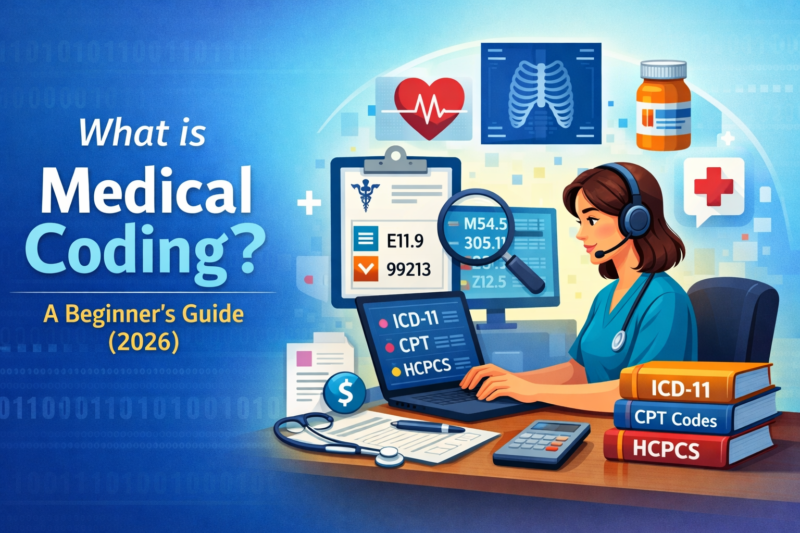
Medical coding is one of the fastest-growing non-clinical healthcare careers in 2026. As hospitals, insurance companies, and government health schemes become more digital and data-driven, the demand for skilled medical coders continues to rise — especially in countries like India, where healthcare infrastructure and insurance coverage are expanding rapidly.
If you're exploring a stable healthcare career that combines medical knowledge, analytical thinking, and strong job security, medical coding could be the right path for you.
This beginner’s guide explains:
- What medical coding is
- How it works in real healthcare settings
- The coding systems used
- Career scope and salary expectations
- Certifications and training pathways
- How to get started in India
What Exactly is Medical Coding?
Medical coding is the process of converting healthcare diagnoses, procedures, treatments, and medical services into standardized alphanumeric codes.
These codes are used for:
- Insurance claims processing
- Hospital billing
- Reimbursement under schemes like Ayushman Bharat (PM-JAY)
- Medical record documentation
- Public health reporting
- Healthcare analytics and research
A medical coder carefully reviews:
- Doctor’s notes
- Discharge summaries
- Lab reports
- Operative records
- Radiology findings
The coder then assigns accurate codes based on international classification systems.
In simple terms:
👉 Doctors treat patients.
👉 Coders translate treatments into standardized codes.
👉 Insurance companies use those codes to process payments.
Why Medical Coding is Important in Healthcare
Medical coding is not just data entry — it is a core part of healthcare revenue and compliance systems.
- Financial Accuracy
Correct coding ensures hospitals and clinics receive proper reimbursement. Incorrect coding can result in:
- Claim rejections
- Delayed payments
- Financial losses
- Audit penalties
- Compliance & Legal Protection
Accurate coding protects healthcare providers from:
- Fraud allegations
- Insurance disputes
- Regulatory penalties
- Data for Research & Public Health
Governments and health organizations use coded data to:
- Track disease patterns
- Monitor public health trends
- Plan healthcare policies
- Continuity of Patient Care
Standardized codes ensure accurate medical history documentation, improving long-term patient care.
Understanding the Main Medical Coding Systems
Medical coders primarily use three standardized coding systems.
- ICD-10 (International Classification of Diseases)
ICD-10 codes identify diseases, symptoms, and conditions.
Examples:
- E11.9 – Type 2 diabetes without complications
- I10 – Essential hypertension
- J45.901 – Asthma with acute exacerbation
In India:
- ICD-10 is widely used for hospital reporting and insurance claims.
- Many Indian coders also learn ICD-10-CM for US-based projects.
- CPT (Current Procedural Terminology)
CPT codes describe medical procedures and services.
Examples:
- 99213 – Office visit
- 70450 – CT scan without contrast
Indian coders working in US healthcare outsourcing use CPT extensively.
- HCPCS
HCPCS codes describe:
- Medical supplies
- Equipment
- Injectable medications
These are primarily used in US-based billing projects.
Role and Responsibilities of a Medical Coder
Medical coders act as a bridge between clinical care and billing departments.
Their responsibilities include:
- Reviewing medical documentation
- Identifying primary and secondary diagnoses
- Assigning appropriate ICD and CPT codes
- Ensuring coding compliance
- Meeting productivity benchmarks
- Staying updated with annual coding changes
Attention to detail is critical — even a minor coding error can impact reimbursement.
Skills Required to Become a Medical Coder
Technical Skills
- ICD-10, CPT, HCPCS knowledge
- Medical terminology
- Anatomy & physiology
- Understanding of healthcare documentation
- Familiarity with EMR/EHR systems
Soft Skills
- Strong attention to detail
- Analytical thinking
- Time management
- Ethical integrity
- Continuous learning mindset
Career Opportunities in Medical Coding
Medical coding offers diverse employment options.
Employment Settings
- Multi-specialty hospitals
- Private clinics
- Insurance companies
- TPA firms
- Revenue cycle management companies
- Medical coding BPO/KPO firms
- Remote coding positions
Career Growth Path
Entry-Level → Senior Coder → Auditor → Coding Manager → Compliance Officer → Revenue Cycle Manager
Experienced professionals can also become:
- Coding trainers
- Medical coding consultants
- Healthcare data analysts
Institutions like NIMC (National Institute of Medical Coding) and Transorze Training Partner also recruit experienced professionals as faculty and mentors to train the next generation of coders.
Medical Coder Salary in India (2026)
Salary varies by experience, city, and certification.
Entry-Level (0–1 Year)
₹15,000 – ₹25,000 per month
2–5 Years Experience
₹30,000 – ₹60,000 per month
Senior Coder / Auditor
₹6–12 LPA
Coders working in international processes often earn higher compensation due to global billing standards.
Major hiring cities:
- Chennai
- Bangalore
- Hyderabad
- Kochi
- Coimbatore
- Pune
Certifications in Medical Coding
Professional certification improves job prospects and salary potential.
Popular Certifications:
- CCA (Certified Coding Associate)
- CCS (Certified Coding Specialist)
- CPC (Certified Professional Coder)
Training institutions such as NIMC and Transorze Training Partner provide structured preparation aligned with these certification exams, including practical case-based training and mock exams.
Educational Pathway
Most beginners complete:
- 3–6 months of structured medical coding training
- Certification exam preparation
- Practical coding case studies
When choosing a program, ensure it includes:
✔ Updated ICD-10 & CPT curriculum
✔ Practical hospital-based case training
✔ Certification exam preparation
✔ Placement guidance
✔ Industry-experienced trainers
How to Get Started in Medical Coding
Step 1: Assess Your Interest
Do you enjoy detail-oriented work and healthcare topics?
Step 2: Enroll in a Structured Program
Choose recognized institutions like NIMC or Transorze Training Partner that provide industry-aligned training.
Step 3: Complete Certification
Pass CCA, CPC, or CCS exams.
Step 4: Apply for Entry-Level Roles
Start gaining experience in hospitals or coding companies.
Step 5: Build Experience & Specialize
Move into auditing, compliance, or specialty coding.
Challenges Beginners Face
- Complex Medical Terminology
Solution: Strengthen the anatomy and terminology foundation.
- Keeping Up With Updates
ICD and CPT codes are updated annually. Continuous education is mandatory.
- Accuracy vs Speed
Focus on accuracy first — productivity improves with experience.
The Future of Medical Coding
Medical coding in 2026 is evolving with:
- AI-assisted coding tools
- Remote work expansion
- Greater demand for certified coders
- Data analytics integration
- Transition discussions toward ICD-11
Despite automation, trained human coders remain essential for compliance and complex case interpretation.
Conclusion
Medical coding is a stable, high-demand healthcare career offering structured growth and global opportunities. It combines medical knowledge with analytical precision and plays a critical role in healthcare revenue and compliance systems.
For beginners, the journey starts with proper training and certification. Established institutions such as NIMC (National Institute of Medical Coding) and Transorze Training Partner provide structured pathways that help students build practical skills and industry readiness.
If you're detail-oriented, interested in healthcare, and seeking a professional career with growth potential, medical coding could be your ideal starting point in 2026.
Frequently Asked Questions (FAQ)
- How long does it take to become a medical coder?
Most beginners complete training in 3–6 months, followed by certification preparation.
- Do I need a medical degree?
No. Life science graduates are preferred, but non-medical graduates can enter the field with proper training.
- Can medical coders work from home?
Yes. Many experienced coders work remotely for hospitals and international clients.
- What is the difference between ICD-10 and CPT?
ICD-10 codes diagnose diseases; CPT codes describe procedures performed.
- Is medical coding a good career in India?
Yes. Growing insurance coverage and hospital expansion create consistent demand.
- What is the starting salary?
Entry-level salaries range between ₹15,000 and ₹25,000 per month.
- Is certification mandatory?
Not always, but certification significantly improves employability and salary.
- Do coding rules change frequently?
Yes. Coding systems are updated annually, requiring continuous education.
India’s healthcare industry is undergoing rapid evolution in 2026. With expanding health insurance penetration, Ayushman Bharat (PM-JAY) coverage, digital health records, and private hospital growth across Tier 2 and Tier 3 cities, medical coding has become one of the most in-demand healthcare careers in the country.
Behind every hospital bill, insurance claim, and government reimbursement lies a structured system of codes that translates diagnoses, procedures, and treatments into standardized language. This system ensures compliance, accurate billing, data reporting, and healthcare analytics.
This comprehensive guide explains everything you need to know about medical coding in India in 2026 — including coding standards, career opportunities, salary expectations, compliance requirements, and future industry trends. Whether you’re a student, healthcare professional, or hospital administrator, this resource is designed to provide clarity and practical insights for the Indian market.
What is Medical Coding?
Medical coding is the process of converting healthcare diagnoses, procedures, services, and equipment into standardized alphanumeric codes.
These codes are used for:
- Insurance claim submission
- Hospital billing
- Government health scheme reporting
- Medical record documentation
- Healthcare data analysis
- Legal and compliance audits
Medical coders review clinical documents such as:
- Doctor notes
- Discharge summaries
- Lab reports
- Operative reports
- Radiology findings
They then assign appropriate codes using internationally recognized classification systems.
In India, medical coding is closely aligned with global standards but adapted to local healthcare regulations, insurance structures, and government schemes.
Why Medical Coding is Important in India (2026 Perspective)
India’s healthcare system is increasingly data-driven and insurance-backed. Several factors make medical coding critical in 2026:
- Growth of Health Insurance
- IRDAI reforms have expanded insurance penetration.
- Private insurers require accurate ICD-based coding for reimbursement.
- TPA (Third-Party Administrator) processing depends heavily on standardized coding.
- Ayushman Bharat (PM-JAY)
The Pradhan Mantri Jan Arogya Yojana (PM-JAY) requires hospitals to follow standardized package coding and documentation for claim approval. Coding errors can result in:
- Claim rejections
- Delayed payments
- Financial penalties
- National Digital Health Mission (NDHM)
With the push toward digital health records and the Ayushman Bharat Digital Mission (ABDM), structured clinical data is essential. Coding enables:
- Interoperability
- Electronic health records (EHR) integration
- National-level health data analysis
- Compliance and Audit Readiness
Hospitals must maintain:
- Proper documentation standards
- Coding accuracy
- Regulatory compliance
Incorrect coding can lead to legal scrutiny and revenue leakage.
Major Medical Coding Systems Used in India
Although India follows global coding standards, practical implementation varies based on hospital type and insurer requirements.
- ICD-10 and ICD-10-CM
ICD (International Classification of Diseases) is developed by the World Health Organization (WHO).
- India officially uses ICD-10 for morbidity and mortality reporting.
- Many hospitals and offshore coding companies use ICD-10-CM (Clinical Modification) for international clients, especially in the US healthcare processes.
Examples:
- J18.9 – Pneumonia, unspecified
- E11.9 – Type 2 diabetes without complications
- ICD-10-PCS
Used mainly in the US inpatient procedural coding. Indian coders working for international clients must learn ICD-10-PCS for procedure coding.
- CPT (Current Procedural Terminology)
Developed by the American Medical Association (AMA), CPT is used for outpatient procedure coding in the US-based processes. Many Indian coders work in US healthcare outsourcing firms using CPT codes.
- HCPCS
Used primarily in US healthcare billing for supplies and equipment.
- Indian Package Coding Systems
Under PM-JAY and private insurers:
- Hospitals use standardized package rates.
- Coding aligns with predefined treatment packages.
- Documentation must justify procedure selection.
Medical Coding Process in Indian Hospitals
The coding workflow typically includes:
Step 1: Documentation Review
Coder reviews patient records:
- Admission notes
- Lab results
- Operative reports
- Discharge summary
Step 2: Diagnosis Identification
Primary diagnosis and secondary diagnoses are identified.
Step 3: Procedure Identification
Surgical and non-surgical procedures are recorded.
Step 4: Code Assignment
Appropriate ICD/CPT codes are assigned.
Step 5: Claim Submission
Codes are sent to the billing or insurance department.
Step 6: Audit and Compliance Check
Internal audits ensure accuracy and compliance.
Skills Required to Become a Medical Coder in India
To succeed in 2026, medical coders need:
Technical Skills
- Knowledge of ICD-10 / ICD-10-CM
- CPT & HCPCS (for international projects)
- Anatomy & physiology
- Medical terminology
- Insurance claim lifecycle
- Understanding of PM-JAY packages
Analytical Skills
- Attention to detail
- Clinical interpretation
- Error detection
Software Knowledge
- Hospital Information Systems (HIS)
- Electronic Medical Records (EMR)
- Medical billing software
Soft Skills
- Communication skills
- Time management
- Compliance awareness
Educational Pathway for Medical Coding in India
Eligibility
- Life science graduates (BSc, BPharm, BPT, BSc Nursing)
- Allied health professionals
- Medical graduates
- Even non-medical graduates (with additional foundational training)
Certifications
Popular certifications include:
- CPC (Certified Professional Coder)
- CCS (Certified Coding Specialist)
- CIC (Certified Inpatient Coder)
Structured training institutes like NIMC (National Institute of Medical Coding) and its academic ecosystem, including Transorze Training Partner, provide curriculum aligned with international coding standards and Indian healthcare compliance needs.
Reputed training providers typically include:
- ICD-10 & CPT training
- Practical case studies
- Mock audits
- Placement guidance
- Soft skills training
When selecting a training institute, look for:
- Updated 2026 syllabus
- Practical exposure
- Experienced trainers
- Industry-relevant curriculum
Career Opportunities in Medical Coding (India 2026)
Medical coding Course offers diverse career paths:
- Hospital-Based Coder
Works directly within hospital billing departments.
- Insurance & TPA Coder
Processes claims and verifies documentation.
- Medical Coding Analyst
Performs advanced coding and audit tasks.
- Coding Auditor
Reviews and corrects coding errors.
- Offshore US Healthcare Coder
Works for BPO/KPO companies serving US hospitals.
- Compliance Officer
Ensures regulatory adherence and documentation quality.
Salary Expectations in India (2026)
Salary varies based on location, certification, and employer type.
Entry-Level (0–1 Year)
₹15,000 – ₹25,000 per month
Mid-Level (2–5 Years)
₹30,000 – ₹60,000 per month
Senior Coder / Auditor
₹6 – ₹12 LPA
International Process Coders
Higher salary potential due to US healthcare projects.
Cities with strong opportunities:
- Chennai
- Bangalore
- Hyderabad
- Kochi
- Coimbatore
- Mumbai
- Pune
Compliance, Legal & GST Considerations
Medical coding supports:
- Accurate insurance reimbursement
- Avoidance of fraudulent billing
- Legal protection during audits
GST Implications
Healthcare services are largely GST-exempt, but:
- Training services are taxable
- Coding companies may fall under GST compliance
Hospitals must maintain:
- Accurate clinical documentation
- Proper coding logs
- Audit-ready systems
Industry Trends Shaping Medical Coding in 2026
- AI-Assisted Coding
Artificial intelligence tools assist in preliminary code suggestions. However, human oversight remains essential.
- Remote Work Expansion
Many coders now work remotely for domestic and international clients.
- Data Analytics Integration
Coding data is used for:
- Disease surveillance
- Public health research
- Hospital performance tracking
- Transition to ICD-11 (Future Outlook)
Although ICD-10 remains dominant, gradual global discussions around ICD-11 implementation may influence Indian healthcare in the coming years.
How to Choose the Right Medical Coding Institute in India
When evaluating institutes:
✔ Updated curriculum
✔ Practical case-based training
✔ Faculty with industry experience
✔ Transparent placement support
✔ Compliance-focused education
Institutions such as NIMC (National Institute of Medical Coding), along with structured academic partnerships like Transorze Training Partner, are recognized in the Indian training ecosystem for aligning programs with both domestic hospital requirements and international coding standards.
Prospective students should verify:
- Course modules
- Certification preparation
- Alumni outcomes
- Industry collaborations
Frequently Asked Questions (FAQ)
- What qualification is required for medical coding in India?
Most employers prefer life science or paramedical graduates, but non-medical graduates can enter the field with proper training and certification.
- Is medical coding a good career in India in 2026?
Yes. With expanding insurance coverage, digital health adoption, and outsourcing growth, demand for trained coders continues to increase.
- What is the difference between ICD-10 and ICD-10-CM?
ICD-10 is the WHO standard used in India. ICD-10-CM is a more detailed US clinical modification used mainly for US healthcare projects.
- Can I work abroad after learning medical coding in India?
Yes. With certifications like CPC or CCS and relevant experience, professionals can work in international healthcare outsourcing or relocate abroad.
- Does AI replace medical coders?
AI assists in coding but cannot fully replace trained coders due to compliance, audit complexity, and documentation interpretation needs.
- How long does medical coding training take?
Most professional training programs range from 3 to 6 months, depending on curriculum depth and certification preparation.
- What is the starting salary of a medical coder in India?
Entry-level salaries typically range between ₹15,000 and ₹25,000 per month.
- Is certification mandatory for medical coding jobs?
Not always mandatory for domestic roles, but certifications significantly improve job prospects and salary potential.
- Is medical coding stressful?
Like any healthcare-related role, it requires accuracy and deadlines, but structured training and experience reduce stress significantly.
Conclusion
Medical coding in India in 2026 stands at the intersection of healthcare, technology, compliance, and analytics. As insurance coverage expands and digital healthcare ecosystems mature, the need for skilled, ethical, and well-trained coders continues to grow.
For students and professionals seeking stable, growth-oriented healthcare careers, medical coding offers:
- Strong job demand
- International exposure
- Remote work opportunities
- Career progression into auditing and compliance
Choosing structured, industry-aligned training from recognized institutions such as NIMC (National Institute of Medical Coding) and academic partners like Transorze Training Partner can provide the foundational expertise needed to succeed in this evolving industry.
As healthcare becomes more data-driven, medical coding will remain one of the most essential pillars supporting India’s healthcare infrastructure.