

Tips for Choosing the Right Medical Coding Course
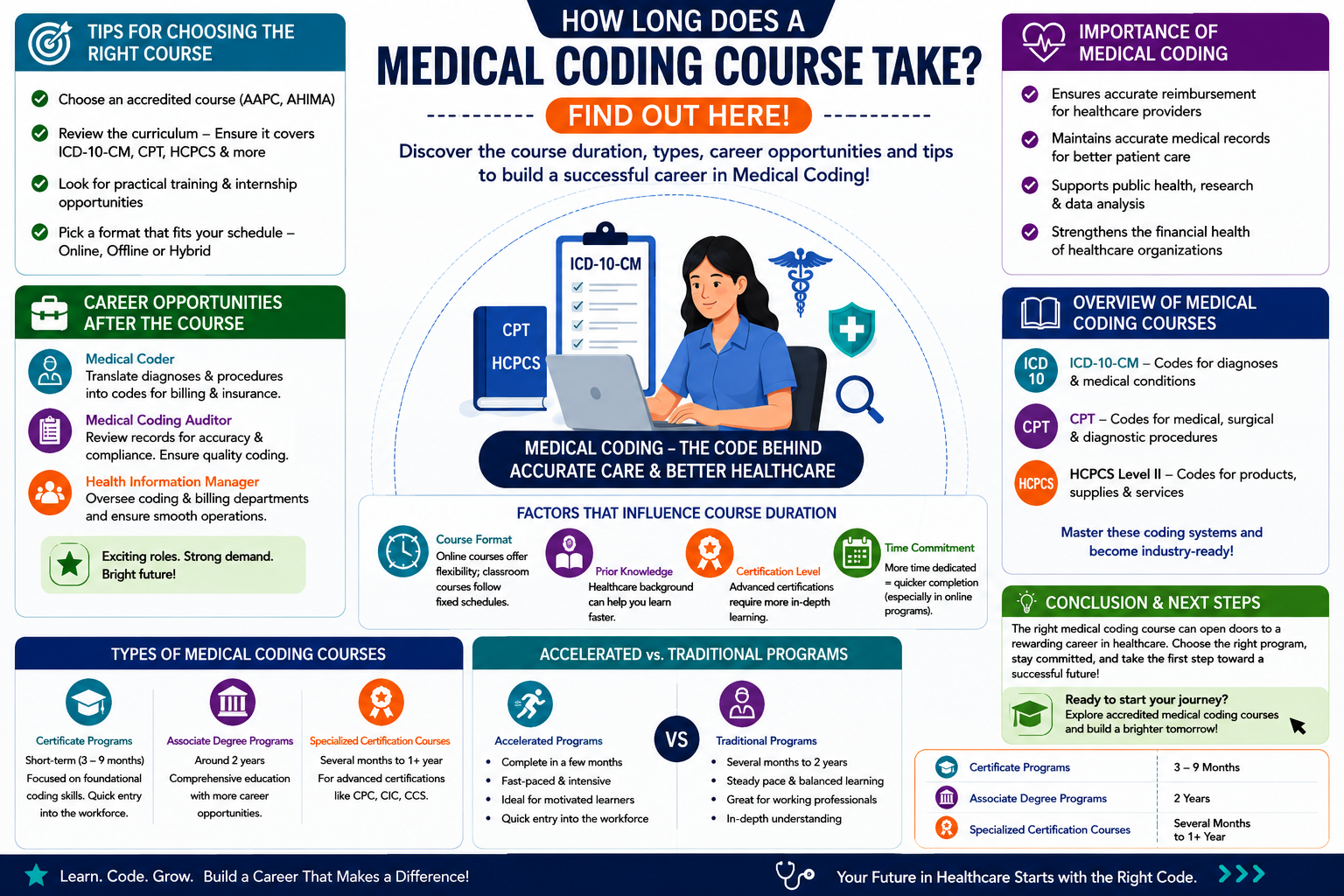
Choosing the right medical coding course is a pivotal decision that can significantly impact your career trajectory. The first thing to consider is accreditation. Ensure that the course you select is accredited by a recognized body such as the American Health Information Management Association (AHIMA) or the American Academy of Professional Coders (AAPC). Accreditation guarantees that the course content meets industry standards and will be recognized by potential employers.
Another critical factor to consider is the curriculum. A comprehensive medical coding course should cover essential topics such as anatomy, physiology, medical terminology, and the various coding systems like ICD-10-CM, CPT, and HCPCS Level II. Reviewing the course syllabus beforehand can give you an idea of the depth and breadth of the content covered. Additionally, consider whether the course offers practical experience, such as hands-on coding practice or internships, which can be invaluable for gaining real-world experience.
Lastly, consider the format and flexibility of the course. Depending on your current schedule and commitments, you may prefer an online course that allows you to study at your own pace, or a traditional classroom setting that offers more structured learning. Some courses also provide hybrid options, combining online and in-person elements. Ensure that the course format aligns with your learning style and lifestyle needs to maximize your chances of success.
Career Opportunities After Completing a Medical Coding Course
Completing a medical coding course opens up a plethora of career opportunities in the healthcare industry. One of the most common roles is that of a medical coder, where you will be responsible for translating medical diagnoses and procedures into standardized codes used for billing and insurance purposes. This role is crucial for the financial health of healthcare providers, as accurate coding ensures that they receive proper reimbursement for their services.
Another promising career path is becoming a medical coding auditor. In this role, you will be responsible for reviewing coded medical records to ensure accuracy and compliance with regulatory requirements. This position often requires a higher level of expertise and may involve additional certifications, but it can also be more rewarding both financially and professionally. Medical coding auditors play a critical role in identifying and correcting coding errors, thereby helping healthcare organizations avoid costly penalties and improve their overall coding accuracy.
For those interested in a more managerial role, there are opportunities to become a health information manager. This position involves overseeing the entire medical coding and billing department, ensuring that all processes run smoothly and efficiently. Health information managers are also responsible for staying updated on the latest coding regulations and implementing any necessary changes within their organization. This role often requires a combination of coding experience and management skills, making it a natural progression for those looking to advance their careers.
Importance of Medical Coding in Healthcare
Medical coding plays a vital role in the healthcare industry by ensuring that healthcare providers are reimbursed accurately and promptly for their services. Accurate medical coding is essential for maintaining the financial health of healthcare organizations, as it directly impacts their revenue cycle. Without proper coding, healthcare providers may face delays in payment or even outright denials, which can have a significant impact on their ability to deliver quality care.
In addition to financial considerations, medical coding is crucial for maintaining accurate medical records. Proper coding ensures that patient information is recorded consistently and accurately, which is essential for effective communication among healthcare providers. Accurate medical records are vital for delivering high-quality care, as they provide a comprehensive history of a patient’s medical conditions, treatments, and outcomes. This information is essential for making informed decisions about patient care and for coordinating treatment among different healthcare providers.
Medical coding also plays a key role in public health and research. The standardized codes used in medical coding allow for the aggregation and analysis of healthcare data on a large scale. This data can be used to identify trends, track the prevalence of diseases, and evaluate the effectiveness of treatments. Public health organizations and researchers rely on accurate medical coding to monitor population health, develop public health policies, and conduct clinical research. In this way, medical coding contributes to the overall improvement of healthcare systems and the advancement of medical knowledge.
Overview of Medical Coding Courses
Medical coding courses are designed to equip students with the knowledge and skills needed to accurately translate medical diagnoses and procedures into standardized codes. These courses typically cover a range of topics, including medical terminology, anatomy and physiology, and the various coding systems used in healthcare. By providing a comprehensive understanding of these subjects, medical coding courses prepare students to excel in their roles as medical coders.
One of the primary focuses of medical coding courses is the International Classification of Diseases, 10th Revision, Clinical Modification (ICD-10-CM) coding system. This system is used to code and classify morbidity data from inpatient and outpatient records, including hospital, physician, and other provider-based records. Students learn how to apply these codes accurately and consistently, which is essential for ensuring proper reimbursement and maintaining accurate medical records.
In addition to ICD-10-CM, medical coding courses also cover the Current Procedural Terminology (CPT) and Healthcare Common Procedure Coding System (HCPCS) Level II coding systems. CPT codes are used to describe medical, surgical, and diagnostic services, while HCPCS Level II codes are used to identify products, supplies, and services not included in the CPT codes. By mastering these coding systems, students are well-prepared to handle the diverse coding needs of healthcare providers.
Factors Influencing Course Duration
The duration of a medical coding course can vary widely depending on several factors. One of the primary factors is the type of course format chosen. Traditional classroom-based courses tend to have fixed schedules and may take longer to complete compared to online courses, which often offer more flexibility. Students who are able to dedicate more time to their studies may be able to complete an online course more quickly than those who have other commitments, such as work or family responsibilities.
Another factor that can influence the duration of a medical coding course is the student’s prior knowledge and experience. Individuals who already have a background in healthcare or related fields may find it easier to grasp the course material and may be able to progress through the course more quickly. Conversely, those who are new to the field may need more time to fully understand the concepts and may take longer to complete the course.
The level of certification being pursued can also impact the course duration. Entry-level certifications, such as the Certified Professional Coder (CPC) offered by the AAPC, may require less time to complete compared to more advanced certifications, such as the Certified Inpatient Coder (CIC) or the Certified Coding Specialist (CCS) offered by AHIMA. Advanced certifications often require a deeper understanding of coding principles and may include additional coursework and practical experience, which can extend the overall duration of the course.
Types of Medical Coding Courses Available
There are several types of medical coding certification courses available, each designed to meet the needs of different students and career goals. One of the most common types is the certificate program, which typically focuses on the fundamental aspects of medical coding. These programs are often shorter in duration and can be completed in a matter of months. Certificate programs are ideal for individuals who are looking to quickly enter the workforce and start their careers as medical coders.
For those seeking a more comprehensive education, associate degree programs in medical coding and billing are also available. These programs typically take two years to complete and cover a broader range of topics, including general education courses, in addition to medical coding-specific content. Associate degree programs provide a more in-depth understanding of the healthcare industry and can open up additional career opportunities, such as supervisory or managerial roles.
In addition to certificate and degree programs, there are also specialized medical coding courses available for those seeking advanced certifications. These courses are designed to prepare students for specific certification exams, such as the Certified Inpatient Coder (CIC) or the Certified Coding Specialist (CCS). Specialized courses often require a higher level of expertise and may include more complex coding scenarios and case studies. These courses are ideal for individuals who are looking to advance their careers and gain a competitive edge in the job market.
Typical Course Length for Different Formats
The length of a medical coding course can vary depending on the format and depth of the program. Certificate programs, which are designed to provide a foundational understanding of medical coding, typically range from three to nine months. These programs are often fast-paced and focus on the essential skills needed to start a career in medical coding. Certificate programs are ideal for individuals who are looking to enter the workforce quickly and gain practical coding experience.
Associate degree programs in medical coding and billing generally take around two years to complete. These programs offer a more comprehensive education, including general education courses in addition to medical coding-specific content. The extended duration of associate degree programs allows for a deeper exploration of the healthcare industry and provides students with a well-rounded education. Graduates of associate degree programs may have more career opportunities and be better prepared for advanced certifications.
Specialized medical coding courses designed for advanced certifications can vary in length depending on the complexity of the certification being pursued. These courses may range from several months to a year or more. Advanced certification courses often include more in-depth coding scenarios, case studies, and practical experience. The additional time and effort required for these courses can be well worth it, as advanced certifications can lead to higher earning potential and more specialized career opportunities.
Accelerated vs. Traditional Medical Coding Programs
When considering medical coding courses, students may have the option to choose between accelerated and traditional programs. Accelerated programs are designed to be completed in a shorter timeframe, often by condensing the course material and offering an intense, fast-paced learning experience. These programs are ideal for individuals who are highly motivated and can dedicate a significant amount of time to their studies. Accelerated programs can be completed in as little as a few months, allowing students to quickly enter the workforce.
Traditional medical coding training programs, on the other hand, follow a more standard academic schedule and may take longer to complete. These programs typically offer a more relaxed pace, allowing students to balance their studies with other commitments such as work or family responsibilities. Traditional programs often span several months to two years, depending on the level of education being pursued. The extended duration allows for a more thorough exploration of the course material and may provide additional opportunities for hands-on experience.
Both accelerated and traditional programs have their advantages and disadvantages. Accelerated programs can be highly rewarding for those who are able to keep up with the rigorous pace, but they may not be suitable for everyone. The fast-paced nature of these programs can be challenging, and students may need to dedicate significant time and effort to succeed. Traditional programs, while taking longer to complete, offer a more balanced approach and may be better suited for individuals who prefer a steadier pace. Ultimately, the choice between accelerated and traditional programs will depend on the student’s personal preferences, learning style, and career goals.
Conclusion and Next Steps
In conclusion, the duration of a medical coding course can vary widely depending on several factors, including the type of course format, the student’s prior knowledge and experience, and the level of certification being pursued. Certificate programs can be completed in a matter of months, while associate degree programs typically take around two years. Specialized courses for advanced certifications may require additional time and effort but can lead to higher earning potential and more specialized career opportunities.
When choosing a medical coding course, it’s important to consider factors such as accreditation, curriculum, and course format. Ensuring that the course is accredited by a recognized body, covers essential topics, and aligns with your learning style and lifestyle needs can significantly impact your chances of success. Additionally, understanding the various career opportunities available after completing a medical coding course can help you make an informed decision and set achievable career goals.
If you’re ready to take the next step in your medical coding journey, consider exploring the various courses and programs available at the National Institute of Medical Coding (NIMC). With a range of options to suit different needs and career goals, NIMC offers accredited courses, comprehensive curriculums, and flexible learning formats to help you succeed in the field of medical coding. Whether you’re looking to quickly enter the workforce or pursue advanced certifications, NIMC can provide the education and support you need to achieve your career aspirations.