

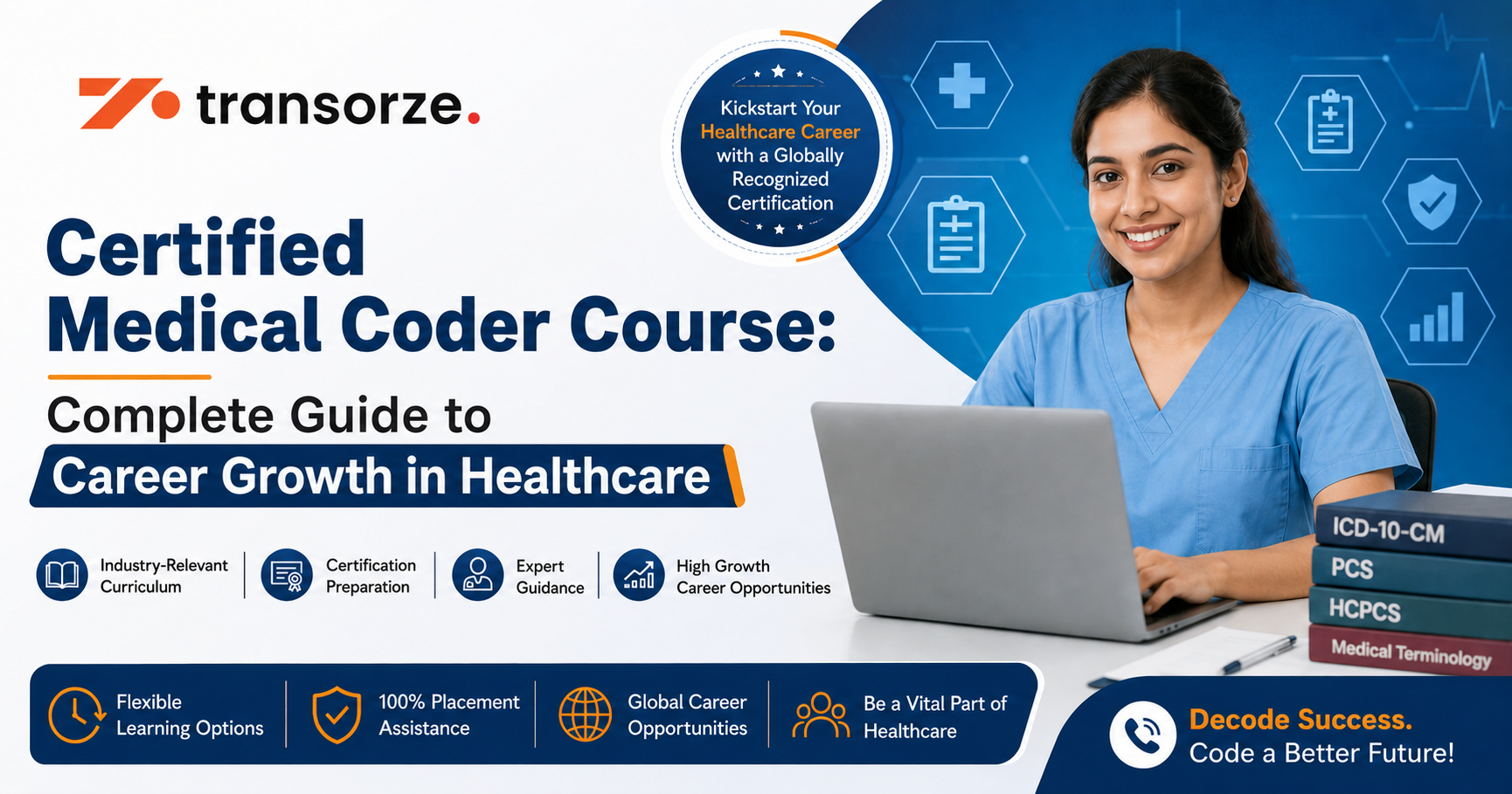
The healthcare industry depends on accurate medical documentation, insurance claims processing, and patient record management. This has created strong demand for certified medical coders across hospitals, insurance companies, healthcare BPOs, clinics, and revenue cycle management firms. For students and professionals looking for a stable healthcare career without direct patient care responsibilities, a certified medical coder course offers a practical and rewarding path.
Medical coding is no longer considered just a back-office role. Certified coders now play a critical role in healthcare compliance, reimbursement accuracy, and healthcare analytics. With healthcare systems expanding globally and digital health records becoming mandatory, the need for trained and certified medical coders continues to grow.
In this guide, you’ll learn everything about certified medical coder courses, including eligibility, course structure, certification pathways, career opportunities, salary expectations, and future industry trends.
What Is a Certified Medical Coder Course?
A certified medical coder course trains students to convert healthcare diagnoses, treatments, procedures, and services into standardized medical codes used for billing and insurance purposes.
Medical coders work with internationally recognized coding systems such as:
- ICD-10-CM
- CPT
- HCPCS Level II
These coding systems ensure uniform communication between healthcare providers, insurance companies, and government healthcare agencies.
A quality medical coding training program typically combines theoretical learning with practical coding exercises, helping students prepare for global certification exams and real-world healthcare documentation processes.
Why Certified Medical Coders Are in High Demand
Healthcare organizations rely heavily on accurate coding for financial reimbursement and regulatory compliance. Even small coding errors can lead to claim denials, revenue loss, audits, or legal complications.
This growing dependence on precise medical coding has increased demand for skilled professionals in:
- Hospitals
- Medical billing companies
- Insurance firms
- Healthcare outsourcing companies
- Telehealth organizations
- Revenue cycle management companies
India has also become a major hub for healthcare outsourcing services, creating strong career opportunities for certified coders in cities like Bengaluru, Chennai, Hyderabad, Kochi, and Pune.
According to industry trends, healthcare digitization and electronic health record adoption are expected to continue driving employment growth for medical coding professionals over the next decade.
Who Should Enroll in a Certified Medical Coder Course?
A certified medical coder course is suitable for:
- Life science graduates
- Pharmacy graduates
- Nursing professionals
- Physiotherapists
- Biotechnology students
- Allied health science graduates
- Freshers seeking healthcare careers
- Professionals transitioning into medical coding
Many courses are designed for beginners, making prior coding experience unnecessary.
Skills You Learn in a Medical Coder Certification Course
A structured medical coder certification course develops both technical and analytical skills.
Core Technical Skills
Students learn:
- Human anatomy and physiology
- Medical terminology
- Disease classification systems
- Diagnostic coding
- Procedural coding
- Insurance documentation standards
- Healthcare reimbursement systems
- Compliance and regulatory standards
Professional Skills
Medical coding professionals also require:
- Attention to detail
- Analytical thinking
- Accuracy under deadlines
- Communication skills
- Problem-solving abilities
- Knowledge of healthcare documentation workflows
These skills help coders maintain coding accuracy and improve claim acceptance rates.
What Does a Certified Medical Coder Course Include?
Most certified medical coding courses follow a structured curriculum covering healthcare fundamentals and coding systems.
Typical Course Modules
- Medical Terminology
Students learn medical vocabulary used in clinical documentation.
- Anatomy and Physiology
Understanding body systems is essential for assigning accurate diagnosis and procedure codes.
- ICD-10-CM Coding
Focuses on diagnosis coding standards used globally.
- CPT Coding
Covers procedural and outpatient service coding.
- HCPCS Coding
Includes coding for supplies, equipment, and non-physician services.
- Healthcare Documentation
Students learn how to interpret physician notes and patient records.
- Medical Billing Basics
Introduces claim processing and reimbursement systems.
- Mock Coding Practice
Hands-on exercises improve coding speed and accuracy.
Certified Medical Coder Course Duration
Course duration depends on the learning format and training depth.
Common Course Timelines
- Short-term certification: 3–6 months
- Advanced programs: 6–12 months
- Online flexible learning: Self-paced
Many students now prefer certified medical coder courses online because they offer flexible schedules while maintaining industry-relevant training standards.
Medical Coding Certifications That Improve Career Opportunities
Completing a training course is valuable, but earning industry-recognized certifications can significantly improve employability and salary potential.
Some widely recognized certifications include:
- CPC (Certified Professional Coder)
- CCS (Certified Coding Specialist)
- CCA (Certified Coding Associate)
- CIC (Certified Inpatient Coder)
Students preparing for global certifications often benefit from specialized training programs focused on exam-oriented preparation and coding accuracy.
You can also explore advanced medical coding certification programs designed to support certification success and long-term career growth.
Career Opportunities After Completing a Certified Medical Coder Course
Medical coding offers multiple career paths across the healthcare ecosystem.
Common Job Roles
- Medical Coder
- Certified Professional Coder
- Coding Auditor
- Medical Billing Specialist
- Coding Quality Analyst
- Risk Adjustment Coder
- Compliance Specialist
- Revenue Cycle Executive
With experience, professionals can move into senior auditing, training, compliance management, or healthcare operations leadership roles.
Those looking to build long-term careers can also explore career advancement opportunities in medical coding that focus on specialization and leadership development.
Salary Expectations for Certified Medical Coders in India
Salary depends on certification level, employer type, location, and experience.
Average Salary Range
| Experience Level | Estimated Salary Range |
| Fresher | ₹2.5–4 LPA |
| 2–5 Years Experience | ₹4–7 LPA |
| Senior Coder/Auditor | ₹7–12 LPA+ |
Professionals with international certifications and specialty coding expertise often command higher compensation packages.
Best Certified Medical Coding Courses: What to Look For
Choosing the right training institute can directly affect your certification success and job readiness.
Important Factors to Evaluate
Industry-Relevant Curriculum
The course should align with current healthcare coding standards.
Practical Coding Training
Hands-on coding practice is essential.
Experienced Trainers
Faculty with real industry experience provide practical insights.
Certification Preparation
Exam-focused coaching improves certification success rates.
Placement Assistance
Institutes offering placement support can help students transition into employment faster.
Students should also consider programs that provide medical coding placement assistance through employer partnerships and interview preparation support.
Online vs Classroom Certified Medical Coder Courses
Both online and classroom learning formats have advantages.
Online Courses
Best for:
- Working professionals
- Flexible learners
- Students in remote locations
Advantages:
- Flexible schedules
- Recorded sessions
- Lower travel costs
- Self-paced learning
Classroom Training
Best for:
- Students who prefer structured learning
- Interactive training environments
- Immediate trainer feedback
Advantages:
- Live interaction
- Group discussions
- Real-time doubt clarification
The best certified medical coding courses combine both online and practical learning components for balanced skill development.
Specialized Medical Coding Fields
As healthcare systems become more complex, specialty coding roles are becoming increasingly valuable.
High-Demand Specializations
- Inpatient Coding
- Outpatient Coding
- Emergency Department Coding
- Radiology Coding
- Orthopedic Coding
- Cardiology Coding
- Risk Adjustment Coding
Professionals interested in niche healthcare domains may benefit from specialized medical coding training paths that focus on advanced coding expertise.
Future Scope of Certified Medical Coding
Medical coding remains one of the most stable healthcare careers due to increasing healthcare documentation requirements worldwide.
Key Industry Trends
Growth of Electronic Health Records
Digital healthcare systems require standardized coding.
Expansion of Telehealth
Remote healthcare services generate additional coding demand.
Healthcare Outsourcing Growth
India continues to expand as a global healthcare outsourcing destination.
AI-Assisted Coding
Artificial intelligence supports coders but does not replace certified professionals. Human review remains essential for compliance and accuracy.
Increased Compliance Requirements
Healthcare regulations continue becoming more complex, increasing demand for skilled coders.
These trends indicate long-term career stability for certified medical coding professionals.
Why Students Choose NIMC for Medical Coding Training
Selecting the right training institution is an important career decision. Students often prefer programs that combine practical coding exposure, certification-focused training, experienced faculty, and placement guidance.
NIMC focuses on industry-oriented learning designed to help students build strong coding fundamentals while preparing for professional certification pathways and healthcare career opportunities.
Frequently Asked Questions (FAQ)
What is a certified medical coder course?
A certified medical coder course trains students to assign standardized codes to medical diagnoses, procedures, and healthcare services for insurance billing and healthcare documentation.
Who can join a medical coder certification course?
Life science graduates, pharmacy students, nurses, allied health professionals, and freshers interested in healthcare careers can enroll.
Is medical coding a good career in India?
Yes. Medical coding offers strong job demand, stable career growth, and opportunities in hospitals, healthcare BPOs, insurance companies, and revenue cycle management firms.
What is the duration of a certified medical coder course?
Most courses range from 3 to 12 months depending on the training format and certification level.
Can I learn medical coding online?
Yes. Many institutes now offer certified medical coder courses online with live sessions, recorded classes, and practical coding exercises.
Which certification is best for medical coding?
The CPC certification is among the most recognized credentials for professional medical coders.
What salary can a fresher medical coder expect?
Freshers typically earn between ₹2.5–4 LPA depending on certification status, location, and employer type.
Does AI replace medical coders?
AI can assist with coding workflows, but certified medical coders remain essential for accuracy, compliance, and claim validation.
Final Thoughts
A certified medical coder course can open the door to a fast-growing healthcare career with long-term stability and advancement opportunities. As healthcare systems continue evolving, certified coders remain essential to maintaining accurate medical documentation, insurance reimbursement, and regulatory compliance.
For students seeking a professional healthcare career with strong demand and global relevance, medical coding offers a practical and rewarding pathway. Choosing the right training program, earning industry-recognized certifications, and building specialized coding expertise can significantly improve career outcomes in this expanding healthcare field.