

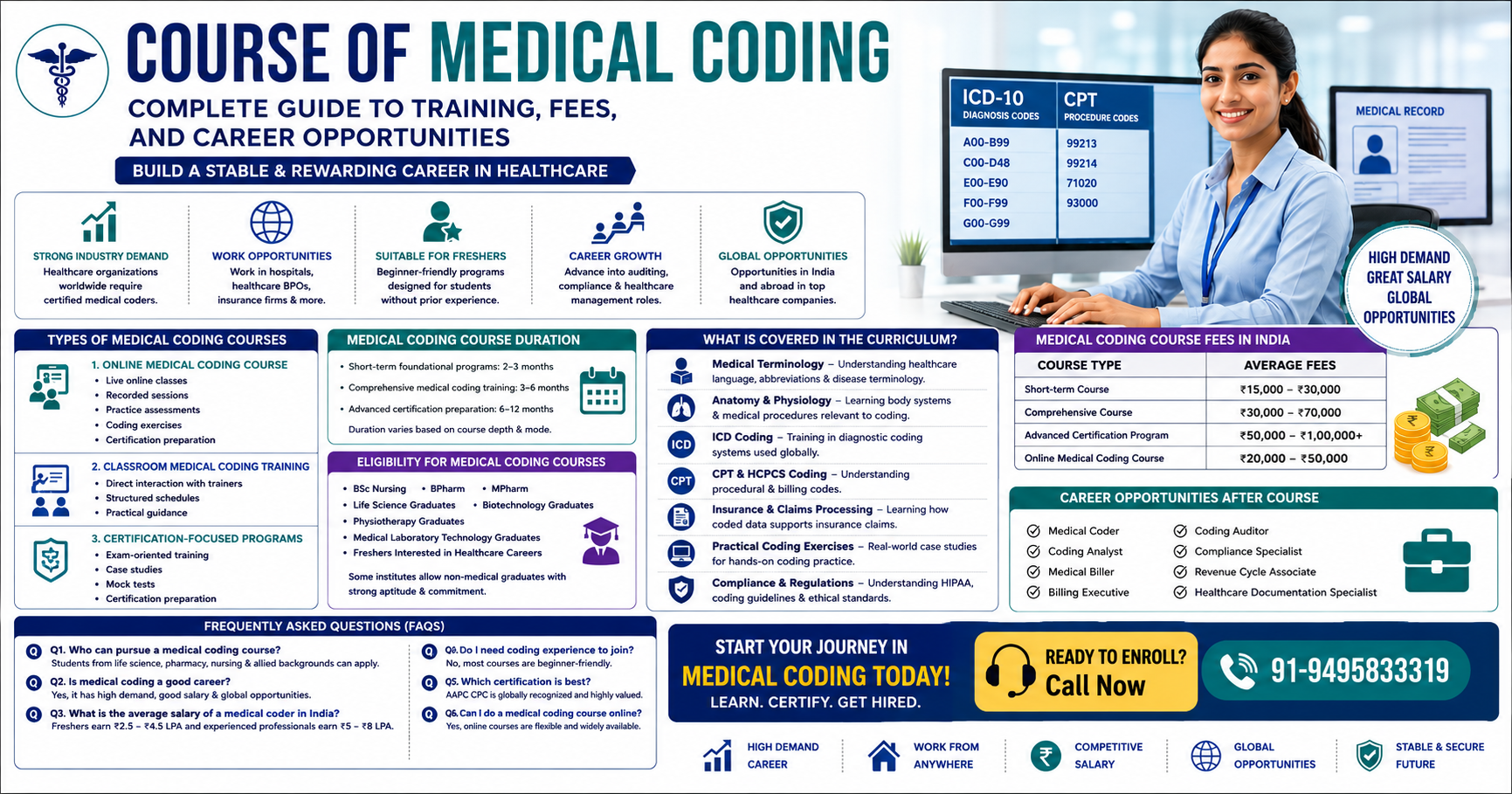
The healthcare industry depends heavily on accurate documentation and billing systems, making medical coding one of the fastest-growing career options in healthcare administration. If you are researching a course of medical coding, understanding the course structure, certification options, duration, and career opportunities is essential before enrolling.
Medical coding professionals convert healthcare diagnoses, treatments, and procedures into standardized codes used for insurance claims, medical records, and healthcare analytics. With hospitals, clinics, insurance companies, and healthcare BPOs expanding rapidly, trained medical coders are in high demand across India and abroad.
This guide explains everything you need to know about medical coding courses, including curriculum, course formats, fees, certifications, career scope, and how institutes like NIMC help students build successful careers.
What Is a Course of Medical Coding?
A medical coding course trains students to understand medical terminology, anatomy, healthcare documentation, and coding systems such as ICD, CPT, and HCPCS. The goal is to prepare learners for careers in medical coding, medical billing, healthcare claims processing, and revenue cycle management.
A quality medical coding program typically includes:
- Medical terminology
- Human anatomy and physiology
- ICD-10 coding
- CPT coding
- HCPCS coding systems
- Healthcare documentation
- Insurance claim processing
- Compliance and healthcare regulations
Students who complete a structured medical coding training course gain the technical knowledge required to work in hospitals, healthcare outsourcing firms, insurance companies, and medical billing organizations.
Why Medical Coding Is a Popular Career Choice
Medical coding has become a preferred career option for graduates from life science, pharmacy, nursing, biotechnology, and allied healthcare backgrounds. The demand continues to rise because healthcare providers need accurate coding for reimbursements and patient data management.
Some major advantages of pursuing a medical coding course include:
Strong Industry Demand
Healthcare organizations worldwide require certified medical coders to ensure accurate billing and compliance.
Work Opportunities in India and Abroad
Medical coders can find opportunities in hospitals, healthcare BPOs, insurance firms, and multinational healthcare companies.
Suitable for Freshers
Many medical coding institutes provide beginner-friendly programs designed for students without prior experience.
Career Growth
Professionals can advance into auditing, compliance, coding quality analysis, and healthcare management roles.
Types of Medical Coding Courses
Students can choose from different learning formats depending on their career goals and schedules.
1. Online Medical Coding Course
Online medical coding courses are ideal for working professionals and students seeking flexible learning options. These programs usually include:
- Live online classes
- Recorded sessions
- Practice assessments
- Coding exercises
- Certification preparation
Online training allows students from different cities to access quality instruction without relocation.
2. Classroom Medical Coding Training
Traditional classroom programs provide direct interaction with trainers, structured schedules, and practical guidance. Many students prefer in-person learning for better engagement and doubt clarification.
3. Certification-Focused Medical Coding Programs
Some institutes focus specifically on preparing students for certification exams. These courses emphasize coding accuracy, case studies, mock tests, and exam-oriented training.
Students interested in certification preparation can explore medical coding certification programs designed to improve professional credibility and job opportunities.
Medical Coding Course Duration
One of the most common questions students ask is:
“How long does a course of medical coding take?”
The duration varies based on course depth and training mode.
Typical course durations include:
- Short-term foundational programs: 2–3 months
- Comprehensive medical coding training: 3–6 months
- Advanced certification preparation: 6–12 months
Students looking for detailed timelines can review medical coding course duration details before selecting a program.
Eligibility for Medical Coding Courses
Most medical coding institutes accept students from healthcare and life science backgrounds.
Common eligible qualifications include:
- BSc Nursing
- BPharm
- MPharm
- Life Science graduates
- Biotechnology graduates
- Physiotherapy graduates
- Medical laboratory technology graduates
- Freshers interested in healthcare careers
Some institutes also allow non-medical graduates if they demonstrate strong aptitude and commitment.
What Is Covered in the Curriculum?
A professional medical coding course should provide practical industry-oriented training rather than only theoretical instruction.
Core Subjects Include:
Medical Terminology
Understanding healthcare language, abbreviations, and disease terminology.
Anatomy and Physiology
Learning body systems and medical procedures relevant to coding.
ICD Coding
Training in diagnostic coding systems used globally.
CPT and HCPCS Coding
Understanding procedural and billing codes used in healthcare reimbursement.
Insurance and Claims Processing
Learning how coded data supports insurance claims and healthcare documentation.
Practical Coding Exercises
Real-world case studies and coding practice sessions improve job readiness.
Institutes like NIMC (National Institute of Medical Coding) focus on practical exposure and industry-oriented learning to help students build confidence before entering the workforce.
Medical Coding Course Fees
Medical coding course fees vary depending on:
- Course duration
- Certification preparation
- Training format
- Institute reputation
- Placement assistance
In India, medical coding training fees generally range between ₹25,000 and ₹1,20,000 depending on course depth and specialization.
Before enrolling, students should evaluate:
- Trainer expertise
- Certification support
- Placement assistance
- Internship opportunities
- Practical training quality
Some institutes also provide installment payment options and scholarship assistance.
Students can also explore medical coding course enrollment options to compare available programs and admission processes.
Career Opportunities After Completing a Medical Coding Course
After completing a medical coding course, graduates can apply for positions such as:
- Medical Coder
- Coding Analyst
- Medical Billing Executive
- Revenue Cycle Executive
- Healthcare Documentation Specialist
- Coding Auditor
- Claims Processing Associate
Top employers include:
- Hospitals
- Insurance companies
- Healthcare BPOs
- Multispecialty clinics
- International healthcare outsourcing firms
With experience and certifications, professionals can progress into senior coding and auditing roles.
Students seeking career advancement may also consider advanced medical coding programs for specialization and higher-paying opportunities.
How to Choose the Best Medical Coding Course
Selecting the right institute is an important step in building a successful healthcare career.
Here are some factors to evaluate before joining:
Experienced Trainers
Look for institutes with trainers who have industry experience.
Updated Curriculum
Healthcare coding systems change regularly, so updated training is essential.
Placement Support
Institutes offering interview preparation and placement assistance provide added value.
Certification Preparation
Choose programs that support national and international coding certifications.
Practical Learning
Hands-on coding exercises and real-world case studies improve employability.
NIMC has become a recognized training institute for students seeking structured medical coding education and career-focused training programs.
Frequently Asked Questions (FAQ)
What is the best course of medical coding?
The best medical coding course includes ICD, CPT, HCPCS training, practical coding exercises, certification preparation, and placement assistance.
Can I study medical coding online?
Yes. Many institutes offer online medical coding courses with live sessions, recorded classes, and virtual assessments.
What is the duration of a medical coding course?
Most courses range from 3 to 6 months, though advanced programs may take longer.
What is the average fee for medical coding training?
Medical coding course fees in India typically range from ₹25,000 to ₹1,20,000 depending on course quality and certification support.
Is medical coding a good career in India?
Yes. Healthcare companies, hospitals, and insurance firms continue to hire trained medical coding professionals due to growing demand.
Do medical coding institutes provide placement assistance?
Many reputed institutes offer placement guidance, resume support, interview preparation, and employer connections.
Who can join a medical coding course?
Life science graduates, pharmacy students, nurses, allied healthcare graduates, and freshers can pursue medical coding training.
Final Thoughts
A well-structured course of medical coding can open doors to stable and rewarding healthcare careers. Whether you choose online learning or classroom training, selecting a program with practical instruction, updated curriculum, and certification support is essential.
As healthcare documentation and insurance systems continue to evolve globally, trained medical coders remain valuable professionals in the healthcare ecosystem. By choosing a trusted training institute and gaining hands-on expertise, students can build long-term career opportunities in one of healthcare’s fastest-growing fields.