

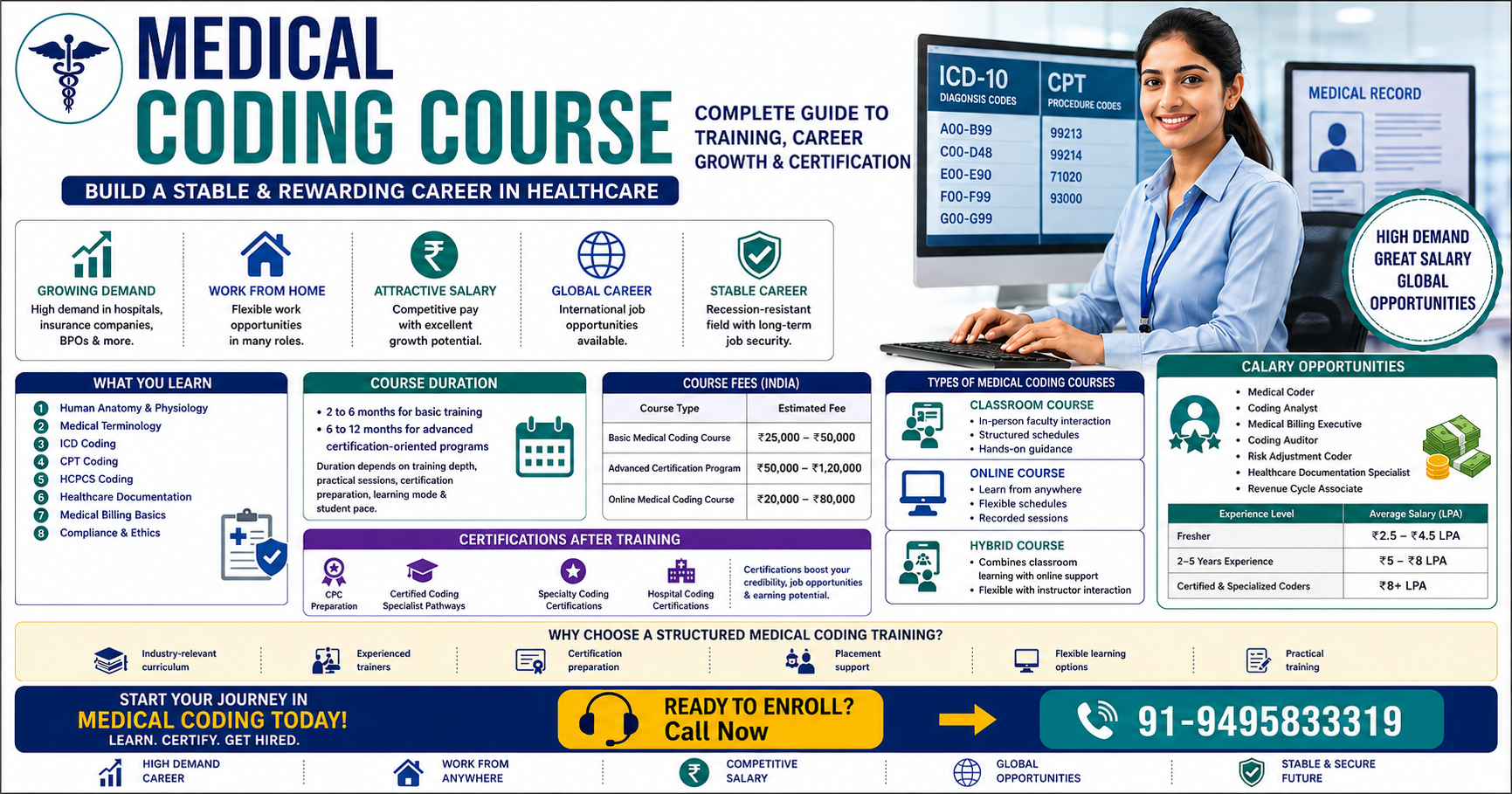
Medical coding has become one of the fastest-growing career paths in the healthcare industry. As hospitals, clinics, insurance companies, and healthcare providers continue to digitize patient records and billing systems, trained medical coders are in high demand across India and globally.
If you are researching a medical coding course, this guide will help you understand everything you need to know—from eligibility and course duration to online learning options, fees, certifications, and career opportunities.
Whether you are a fresh graduate, life science student, healthcare professional, or someone looking for a stable career transition, medical coding offers strong growth potential with flexible learning opportunities.
What Is Medical Coding?
Medical coding is the process of converting medical diagnoses, procedures, treatments, and healthcare services into standardized alphanumeric codes. These codes are used for:
- Insurance claims processing
- Medical billing
- Healthcare documentation
- Hospital administration
- Compliance and auditing
- Revenue cycle management
Medical coders work with systems such as:
- ICD (International Classification of Diseases)
- CPT (Current Procedural Terminology)
- HCPCS (Healthcare Common Procedure Coding System)
Accurate coding ensures healthcare providers receive proper reimbursement while maintaining compliance with healthcare regulations.
Why Medical Coding Is a Popular Career Choice
A medical coding course is attractive because it provides a pathway into the healthcare industry without requiring years of clinical education.
Key Benefits of a Medical Coding Career
- Growing healthcare industry demand
- Opportunities in hospitals, insurance companies, and BPOs
- Work-from-home opportunities in some roles
- Competitive salary growth
- International career opportunities
- Stable and recession-resistant field
- Suitable for life science graduates and healthcare professionals
The increasing use of electronic health records (EHR) and insurance processing systems has further expanded the need for skilled medical coders.
Who Can Join a Medical Coding Course?
Most medical coding training programs are open to students and professionals from healthcare or life science backgrounds.
Common Eligibility Criteria
You may be eligible if you are:
- A graduate in Life Sciences
- A pharmacy student or graduate
- A nursing graduate
- A physiotherapy graduate
- A biotechnology student
- A medical laboratory professional
- A healthcare administration student
Some institutes also accept non-medical graduates, depending on the course structure and training level.
What You Learn in a Medical Coding Course
A comprehensive medical coding course covers both theoretical concepts and practical coding applications.
Core Subjects Usually Included
1. Human Anatomy & Physiology
Understanding body systems, organs, diseases, and medical terminology.
2. Medical Terminology
Learning common healthcare vocabulary, abbreviations, and documentation language.
3. ICD Coding
Training in diagnostic coding systems used globally.
4. CPT Coding
Procedure coding for physician services and treatments.
5. HCPCS Coding
Coding systems used for medical equipment and additional healthcare services.
6. Healthcare Documentation
Reading and interpreting medical records accurately.
7. Medical Billing Basics
Introduction to insurance claims and reimbursement processes.
8. Compliance & Ethics
Understanding coding regulations and healthcare standards.
Types of Medical Coding Courses
There are multiple training formats available depending on your schedule, career goals, and learning preferences.
1. Classroom Medical Coding Course
Traditional classroom programs offer:
- In-person faculty interaction
- Structured schedules
- Hands-on guidance
- Peer learning opportunities
This option is ideal for students who prefer face-to-face learning environments.
2. Online Medical Coding Course
An online medical coding course is increasingly popular because it offers flexibility and accessibility.
Benefits include:
- Learn from anywhere
- Flexible schedules
- Recorded sessions
- Weekend batches
- Lower travel expenses
Online learning works especially well for working professionals and students balancing other commitments.
3. Hybrid Medical Coding Training
Hybrid programs combine classroom learning with online support, giving students flexibility while maintaining instructor interaction.
Medical Coding Course Duration
One of the most frequently searched topics is medical coding course duration.
Most programs range between:
- 2 to 6 months for basic training
- 6 to 12 months for advanced certification-oriented programs
Course duration depends on:
- Training depth
- Practical sessions
- Certification preparation
- Learning mode (online/offline)
- Student pace
You can explore more about training timelines through the medical coding course duration guide.
Medical Coding Course Fees
Medical coding course fees vary depending on:
- Institute reputation
- Course level
- Certification preparation
- Placement assistance
- Online vs classroom format
Average Fee Range in India
| Course Type | Estimated Fee |
|---|---|
| Basic Medical Coding Course | ₹25,000 – ₹50,000 |
| Advanced Certification Program | ₹50,000 – ₹1,20,000 |
| Online Medical Coding Course | ₹20,000 – ₹80,000 |
Students should evaluate curriculum quality, faculty expertise, certification preparation, and placement support before making decisions based only on cost.
Best Medical Coding Courses: What to Look For
Choosing the right medical coding course is important for long-term career success.
Important Factors to Consider
Industry-Relevant Curriculum
Ensure the program includes ICD, CPT, HCPCS, anatomy, and practical coding exercises.
Experienced Trainers
Faculty with healthcare industry experience can provide better practical insights.
Certification Preparation
Look for courses aligned with globally recognized certification standards.
Placement Support
Good institutes often provide interview preparation and job assistance.
Flexible Learning Options
Weekend, online, and hybrid classes can help working professionals.
Practical Training
Hands-on coding exercises improve confidence and employability.
Certifications After Medical Coding Training
Many students pursue certifications after completing a medical coding course.
Popular certification pathways may include:
- CPC preparation
- Certified coding specialist pathways
- Specialty coding certifications
- Hospital coding certifications
You can learn more through the medical coding certification programs section.
Career Opportunities After a Medical Coding Course
Medical coding opens doors to various healthcare career roles.
Common Job Roles
- Medical Coder
- Coding Analyst
- Medical Billing Executive
- Coding Auditor
- Risk Adjustment Coder
- Healthcare Documentation Specialist
- Revenue Cycle Associate
Industries Hiring Medical Coders
- Hospitals
- Insurance companies
- Healthcare BPOs
- Medical coding companies
- Telehealth organizations
- Healthcare IT firms
Salary After Completing a Medical Coding Course
Salary depends on skills, certifications, location, and experience.
Estimated Salary Range in India
| Experience Level | Average Salary |
|---|---|
| Fresher | ₹2.5 – ₹4.5 LPA |
| 2–5 Years Experience | ₹5 – ₹8 LPA |
| Certified & Specialized Coders | ₹8+ LPA |
International certifications and specialty expertise can significantly improve salary potential.
Is Medical Coding a Good Career in 2026 and Beyond?
Yes. Medical coding continues to show strong long-term demand because healthcare systems worldwide require accurate documentation and insurance processing.
Several factors are driving growth:
- Expansion of healthcare services
- Increased health insurance usage
- Digital health records adoption
- Global outsourcing demand
- Telemedicine growth
As healthcare systems become more data-driven, trained coders remain essential.
How to Choose the Right Medical Coding Institute
When evaluating training institutes, ask these questions:
- Does the curriculum match current industry standards?
- Are trainers experienced in real-world coding?
- Is certification preparation included?
- Are placement support and mock interviews offered?
- Does the institute provide practical projects?
- Are online and offline learning options available?
You can also review available medical coding training programs before selecting the best fit for your career goals.
Medical Coding Course Near Me: What to Consider
Many students search for “medical coding course near me” when comparing local institutes.
Instead of choosing only by location, evaluate:
- Faculty quality
- Student reviews
- Placement history
- Curriculum quality
- Certification success rates
- Internship opportunities
For learners preferring flexible study options, online programs may offer wider access to experienced trainers and updated curriculum.
Why Students Prefer Structured Medical Coding Training
Structured training programs help students:
- Understand coding systems systematically
- Practice real medical records
- Build exam confidence
- Improve job readiness
- Gain interview preparation support
Professional healthcare education providers like NIMC focus on combining theoretical knowledge with practical industry exposure.
How to Enroll in a Medical Coding Course
The enrollment process is usually straightforward.
Typical Admission Steps
- Submit inquiry or application form
- Attend counseling session
- Verify eligibility
- Select training format
- Complete enrollment process
- Begin classes
Students interested in admissions can also review medical coding course enrollment options for additional guidance.
Frequently Asked Questions (FAQ)
What is the duration of a medical coding course?
Most medical coding courses last between 2 and 12 months depending on the training level and certification focus.
Can I do a medical coding course online?
Yes. Many institutes now offer online medical coding courses with live classes, recorded sessions, and flexible schedules.
What qualification is required for medical coding?
Life science, pharmacy, nursing, physiotherapy, and healthcare graduates are commonly eligible. Some programs also accept non-medical graduates.
Is medical coding difficult to learn?
Medical coding requires dedication and attention to detail, but structured training makes it manageable for most students.
What is the average salary for medical coders in India?
Freshers may earn ₹2.5–₹4.5 LPA, while experienced and certified coders can earn significantly more.
Are certifications necessary after a medical coding course?
Certifications are not always mandatory, but they improve credibility, job opportunities, and salary potential.
Is medical coding a work-from-home job?
Some organizations offer remote or hybrid roles after candidates gain experience.
Which is the best medical coding course?
The best course is one that offers updated curriculum, experienced trainers, practical exposure, certification preparation, and placement assistance.
Final Thoughts
A medical coding course can be an excellent investment for students and professionals looking to build a stable career in the healthcare industry. With strong demand, flexible learning options, and growing career opportunities, medical coding continues to attract learners across India and abroad.
Before enrolling, compare curriculum quality, trainer expertise, practical exposure, certification support, and placement assistance. Choosing the right training program can significantly impact your long-term success in the healthcare sector.